
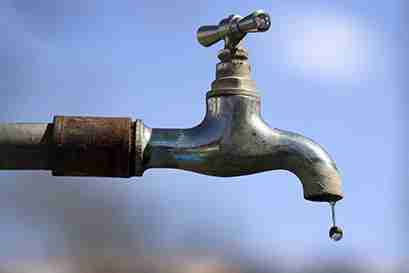
Water scarcity is not a new problem. However, it is an issue that could worsen if optimizations are not made regarding the management of the most vital element in society: the water.
According to the United Nations (UN), more than 2.7 billion people are expected to suffer from a lack of water in 2025 if the planet's consumption does not decrease.
There are even real fears that water will be the cause of future conflicts between nations. Water will be the 'liquid gold' of the future, if scarcity problems are not resolved.
Many countries have already suffered from droughts and managed to overcome this scenario. Brazil, with the union between public and private power, needs to be inspired by these successful international cases.
States like São Paulo and others in the northeast have already experienced routine water shortages. It is necessary to seek references and treat this resource with the attention it deserves.

The great Brazilian water challenge
Water scarcity in Brazil is caused by a set of factors such as lack of awareness in its use, lack of regulation for reuse techniques, little investment in infrastructure and mainly due to water waste.
Almost 40% of Brazil's treated water is wasted mainly due to leaks, but also due to fraud and other problems in the distribution network.
Billions of liters of treated water are literally thrown away.
This is a terrible fact. All this water has a treatment cost, so it is also wasted money. All because of the Brazilian distribution network that lacks investment. The pipe network is considered old and needs maintenance.
The North Region is considered the most critical. There, more than half of the water is lost. In Europe, this waste is 15%. In Japan, it is only 3%. But how do these countries manage to overcome this situation?
The answer is with investments and technology to avoid waste.
In São Paulo, around R$ 250 million is applied annually to reduce losses, but it is still little compared to the need for repairs.
The study carried out by Instituto Trata Brasil revealed that a simple 10% reduction in the country's waste would represent revenue of R$ 1.3 billion.
It means almost half of the investment made in water supply in 2010. Part of this money could also be applied to water reuse, awareness campaigns, etc.
In an interview, André Ramalho, CEBDS Technical Advisor, revealed that today there is no regulation for the external reuse of water, that is, the water that is discarded in the system cannot be retracted and served to industry, agriculture, etc.
Today, only companies can do internal reuse. They reuse water internally before returning it to the system. André gave a good example of reuse: the city of São Paulo, which reuses water for urban cleaning, garden maintenance, etc.
6 solutions to combat water scarcity in other countries
The UN estimates that there are already around 1.1 billion people who lack access to drinking water in the world. Earth is a blue planet, but still there is scarcity. As is known, only 2.5% of the planet's water is fresh.
And most of it is frozen at the poles and mountains. Thus, less than 0.1% remains in rivers, lakes and groundwater for human use. Many countries have already suffered from water shortages. Brazil can and should learn from these cases.
See below 6 solutions used internationally to combat this problem.
#1 – Australia and investment
This country underwent a serious adaptation in order to avoid shortages. Between 1997 and 2009, there was the most severe dry period. Then, between 2013 and 2014 there were 156 temperature records.
The solution was to invest heavily in infrastructure. It was R$ 6 billion to prevent leaks and save water.
They used a technique that many countries apply in their water systems: the water treatment and reuse.
The works direct wastewater leaving homes to reservoirs. So, she is treated.
This “reused water” returns to homes, already adapted to receive it from a special tap. Thus, it is used for cleaning the house, washing clothes and other activities.
This way, there is no need to capture more resources from nature, saving drinking water.
In Brazil, André Ramalho raised another point, in addition to the lack of legislation, which makes water reuse difficult: the prejudice.
This water would have a huge impact on the economy, but many people don't believe it is useful. However, reused water is as clean as river water before it was treated.
Furthermore, a large investment needs to be made – which would make this solution difficult in the short and medium term in Brazil.
#2 – China and its integrated water program
China also suffered a threat of drought in its northeast. To solve the problem, an integrated program of actions was developed.
Two main measures were taken. The implementation of cisterns throughout the country. Currently, there are 83 thousand distributed throughout China. And another 4 thousand reservoirs.
The second measure is a program of water efficiency seals for toilets, urinals, taps and sinks, very similar to the Brazilian Procel Energy Efficiency Seal.
Thus, consumers start to prefer more economical utensils, which in addition to being more sustainable, also reduce water bills.
Dante Ragazzi, president of the Brazilian Association of Sanitary and Environmental Engineering (Abes), said that this water efficiency Seal is a great idea, which could be implemented in Brazil.
#3 – USA and the reduction in consumption
In California, due to its population density, there have also been many droughts.
Some of the measures to solve this problem were focused on individual water savings. There was an increase in water tariffs, fines of US$ 500 per day for anyone caught wasting drinking water to wash sidewalks or wash cars.
There was also a change in landscaping, replacing vegetation that requires increased consumption in homes, shopping centers and golf courses.
In addition, recycled water is dammed for irrigation and toilet flushing.
These financial measures that stimulate the economy have proven to be effective in Brazil. São Paulo is a good example, where consumption has been reduced.
#4 – Japan and awareness
Japan is a small and overpopulated country. Since 1955, drought scenarios have always occurred. Therefore, a General Manual against Drought was developed.
It has measures that prevent the phenomenon and of course, educates with actions to be taken when there is a drought.
However, Japan's great victory is behavioral. People are impacted by massive campaigns and understand the problem, thus really saving resources.
Since 1978, every 15th has been considered “save water day”.
The country is highly efficient. Therefore, infrastructure waste is minimal. The toilets, sinks and taps are also highly technological, helping to save money.
In Brazil, there needs to be technological, political and financial advancement to follow the same path.
#5 – Israel and exploitation
Israel is an arid country. Since his birth, he has faced drought. Thus, many laws were created to regulate the use of water, with savings systems.
Technology also plays a key role in Israel in saving water. Exclusive techniques in Israel allow water to be extracted even from frost. Water treatment and reuse, according to the government, is highly efficient.
91% of sewage is collected and 80% of it is treated and reused for agriculture in the southern part of Israel (totaling 525 million m³ per year). Israel also has strict loss control. They total only 7% of the total, different from the approximately 40% in Brazil.
In addition, there are 5 desalination centers, which capture water from the Mediterranean Sea and supply 70% of domestic consumption.
#6 – Singapore and water efficiency
Singapore is a small island. There, the entire population is served by drinking water – in addition, the country's sewage is 100% treated and reused.
For these reasons, Singapore is one of the most efficient places in water reuse.
As we have already seen, this reuse is only possible because there were investments in infrastructure. The infrastructure is used to collect rainwater, reduce leaks, raise awareness campaigns and also has desalination plants.
And if it still says water, the country imports water from Malaysia through pipelines. This is a complicated and expensive operation.
Just like in China, Singapore has a program that encourages the consumption of products with greater water efficiency. As mentioned, the stamp program for products with greater efficiency is a good idea to be implemented in Brazil.
However, other solutions such as reusing water and importing the liquid are unfeasible in the short term.
BONUS – Aruba and desalination
The island of Aruba, in the Caribbean, has the sea as its main source of water. At just 320 kilometers, Aruba has the second largest desalination plant in the world.
This method has been used to obtain drinking water for 80 years. However, this modern plant was opened in 2000.
It is currently responsible for producing 45 million liters of water per day. Thus, Aruba's water is recognized for its quality. You can drink directly from the taps.
However, there is still a burden: the water bill is considered expensive by city residents.
In Brazil, this solution is unfeasible because it requires a large investment, which would make the bill more expensive and the demand for water is continental.
Conclusion
Is Brazil ready to go through a drought?
As we have seen, water scarcity is a global reality. All countries, companies and people need to be concerned about this fact.
With population growth, climate change and especially the accumulation of people in large urban centers, preventive measures must be taken to prevent droughts from occurring.
Continue reading these other articles on our blog:
- Climate Change: current projects and financing systems
- Practical Guide to the Sustainable Value Chain
- What is the Paris Agreement and the goals of the Brazilian NDC?
Of the ideas presented, the ones that stand out the most are investments to reduce leaks, which are currently responsible for around 40% of treated water in Brazil.
Other good initiatives are water efficiency seals and incentives for water saving. In addition to the regulation of reused water, which can make use of much of what is wasted today.
Imagine how many billions of liters of drinking water are used in toilets, showers, gardens, agriculture, industries and much more.
However, for this use to happen, policy must focus on this, with investments and laws that encourage the economy.
It is essential that these changes happen so that Brazil does not suffer from a serious water crisis in the future.


