
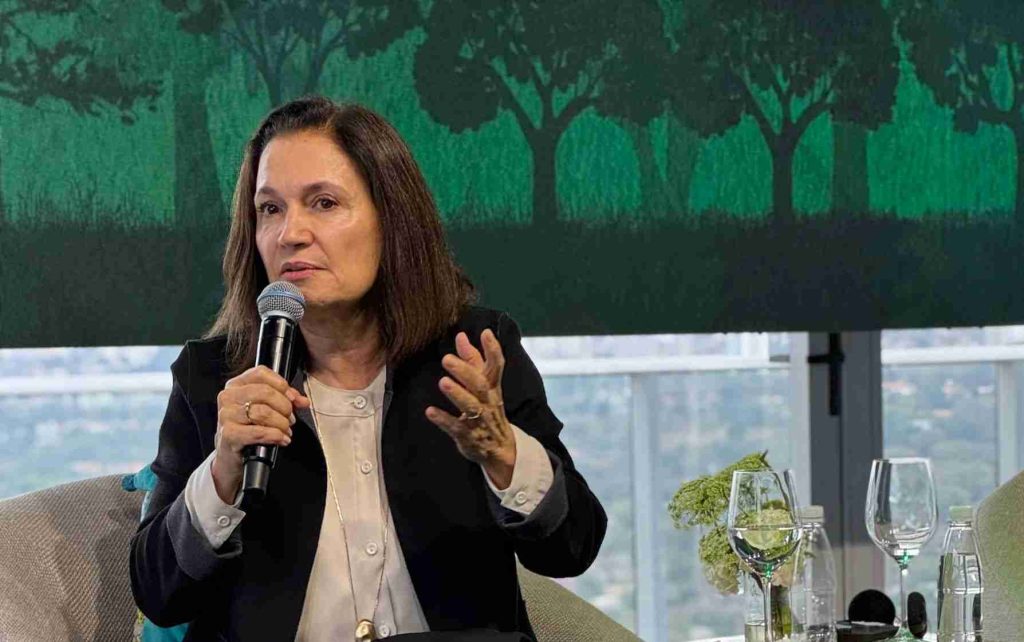
By Marina Grossi*, Marcelo Behar (WBCSD), and Shalini Unnikrishnan (BCG)***
Innovative, the concept of regenerative landscapes It proposes the adoption of practices focused on ecosystem recovery, starting with restoring the health of the soil, water, and cultivated and native species, creating more resilient environments for people and nature. It goes beyond conservation itself, seeking to integrate multiple rural properties and communities in the same region, different sectors and interests, so that land use functions as a self-renewing system capable of sustaining biodiversity, restoring natural processes, and improving quality of life, even while receiving anthropogenic activities that could act as environmental stressors, such as agriculture and urbanization.
This topic gained prominence at COP28 in Dubai in 2023, when it was launched... Action Agenda for Regenerative Landscapes (AARL, in its English acronym), a movement that seeks to catalyze investments in regenerative agriculture and sustainable land use, in supply chains linked to more than 90 agricultural commodities in over 110 countries. The initiative's ambition is to facilitate the transition to regenerative agricultural practices By 2030, combining private sector efforts to improve soil health, increase the climate resilience of agricultural production systems, and improve the livelihoods of millions of farmers.
Because it harbors the richest global biodiversity and assumes a world leadership position in agricultural production And in sectors related to land use, Brazil was chosen to be the first pilot accelerator of AARL, focusing on the Cerrado and the Amazon.
To make the initiative viable, the country relies on LAB (Regenerative Landscapes Accelerator Brazil), a program that brings together government, businesses, and civil society to promote the adoption of regenerative agriculture practices based on three key pillars: financing, performance metrics It is public policies. The objective is clear: catalyze the transition to regenerative landscapes from mechanisms of blended finance. According to studies by the Boston Consulting Group (BCG), achieving the regenerative potential of the Cerrado and the Amazon will require approximately US$$55 billion and US$$62 billion in investments, respectively.
In addition to BCG, which developed studies to support the LAB, the initiative is led by the World Business Council for Sustainable Development (WBCSD) and the Brazilian Business Council for Sustainable Development (CEBDS), and has the Ministry of Agriculture, Livestock and Supply (MAPA) as one of its main partners. Thus, the union of expertise It will be essential to compose a A mosaic of landscapes that reconcile production, conservation, and restoration. from a regenerative perspective.
Initiating the project in the Cerrado and the Amazon is strategic, as both regions combine socio-environmental urgency with great economic and climate potential. The Cerrado, with almost 200 million hectares, is the most biodiverse savanna on the planet and an important agricultural hub, making it a key territory for accelerating more sustainable land-use models. With almost half of its native vegetation already converted and increasing agricultural expansion, there is an opportunity to direct growth to already cleared areas, reconciling productivity, conservation, and regeneration, while increasing resilience to climate change. In the Amazon, Pará, which holds 30% of the biome and hosts COP30, concentrates 24 million hectares converted and up to 8.8 million hectares with potential for regenerative systems, representing an investment opportunity of up to US$21 billion by 2040. Success in this region will demonstrate that development and conservation can go hand in hand.
In 2025, LAB will be launched anchored in over US$$100 million in individual investments already made by its corporate and financial members in regenerative landscapes, demonstrating that the private sector is implementing its public sustainability commitments even in the face of structural barriers. In this first cycle, LAB acted as a hub This involves multi-sectoral alignment, identifying opportunities and obstacles related to public policies, finance, and metrics. The recently launched Action Plan details this work, presenting the necessary conditions to advance the large-scale regeneration agenda in Brazil.
By 2026, LAB will evolve into a co-investment-focused action platform dedicated to implementing recommendations within specific landscapes. Its role will be to catalyze collective investments from its corporate members, in collaboration with the financial sector, public authorities, and civil society, while simultaneously working to overcome barriers identified in 2025. With the ambition of mobilizing US$$5 billion in investment by 2030, LAB envisions Brazil as a global model for regenerative transformation, as demonstrated in our [reference to a document or report]. Action Plan. This is a true collective effort for the regeneration of Brazilian landscapes, which finds in COP30 in Belém a historic opportunity to show the world that economic development, environmental conservation, and social inclusion can go hand in hand. The real question is not whether the transition to regenerative landscapes will happen, but rather at what speed Brazil will assume the global leadership that its biodiversity and productive sector demand. The time to join forces is now, to build a legacy of prosperity and balance for future generations.
* Marina Grossi is president of CEBDS (Brazilian Business Council for Sustainable Development), an organization with 28 years of experience and 120 large associated companies, Special Envoy of the COP30 Presidency for the Business Sector
** Marcelo Behar is a senior advisor to CEBDS and WBCSD (World Business Council for Sustainable Development) and Special Envoy of the COP30 Presidency for Bioeconomy.
*** Shalini Unnikrishnan is Managing Director & Senior Partner at the Boston Consulting Group and co-chair of the COP28 Action Agenda for Regenerative Landscapes.
O World Business Council for Sustainable Development (WBCSD, World Business Council for Sustainable Development) is the leading business community of over 250 global companies that make sustainability a driver of competitiveness. Founded in 1995, the WBCSD is a nonprofit organization led by its member companies, connecting business leaders from all sectors and the world’s major economies, creating tools and frameworks to amplify collective impact, drive cross-sector innovation, and shape an ambitious and enabling policy agenda. We operate from seven offices around the world—Geneva, New York, Chicago, Amsterdam, London, Singapore, and Wuhan—promoting collaboration across value chains and geographies. Together with our members, we are reshaping economic and financial systems to support the transition to a net-zero emissions, nature-positive, and inclusive future that generates business value.
O Boston Consulting Group BCG establishes partnerships with business and societal leaders to address the most important challenges and capture great opportunities. BCG pioneered business strategy when it was founded in 1963. Today, we work closely with clients to adopt a transformative approach that seeks to benefit everyone. stakeholders, Empowering companies to grow, develop sustainable competitive advantages, and make a positive impact on society. Our diverse and global teams offer technical expertise and a range of perspectives that challenge the status quo and drive change.
BCG delivers solutions through cutting-edge consulting, technology, design, and corporate and digital initiatives. We work with a unique collaborative model across the enterprise and at all levels of the client organization, driven by the goal of helping our clients succeed and helping them make the world a better place.
O Brazilian Business Council for Sustainable Development (CEBDS) CEBDS is a non-profit civil association that has been promoting sustainable development in Brazil since 1997, through engagement with governments and civil society, as well as disseminating the most current concepts and practices on the subject. A voice for the business sector, CEBDS brings together approximately 120 of the largest business groups in the country, and is also the Brazilian representative of the World Business Council for Sustainable Development (WBCSD), which is present in 36 countries and has 200 member companies worldwide.


