Promoted by CEBDS and PSR, the first two workshops of the second phase of the initiative brought together companies, associations, and government to discuss the technical, regulatory, and economic conditions for Brazil's energy transition.
The Electricity Sector Coalition held the first two thematic workshops of its second phase in September and October 2026. Organized by the Brazilian Business Council for Sustainable Development (CEBDS), in partnership with PSR, the meetings explored topics that need to advance in a coordinated manner so that clean electricity contributes to decarbonization, competitiveness, and the economic development of the country.
The first workshop, held on September 18th in Rio de Janeiro, was dedicated to the electrification of the economy and listening to stakeholders to create a general overview of the sector. The second, held on October 22nd in Brasília, focused on flexibility and economic signals in the Brazilian Electric System (SEB). Together, the meetings brought into dialogue different dimensions of the transition: on the one hand, the expansion of electricity use in industry and transportation; on the other, the modernization of the electrical system itself to respond to new demands, technologies, and consumption patterns.
What are CEBDS Coalitions?
Business Coalitions for Climate Action are a CEBDS initiative focused on building collective decarbonization agendas for strategic sectors of the Brazilian economy. The project brings together companies, associations, experts, public officials, and other organizations to identify opportunities for emissions reduction, build consensus, and transform diagnoses into implementation proposals.
In the first phase, the Coalitions mobilized more than 270 organizations from the transport, electricity, agriculture and land use, and mining sectors. The work mapped approximately 150 climate transition levers with a combined potential to mitigate approximately... 1.1 GtCO₂e per year in 2050, compared to a scenario of inaction. The results were presented as a corporate contribution to the Brazilian climate agenda.
In 2026, the project entered a new phase. The focus shifted from identifying the levers to discussing the conditions necessary for its implementation and scaling up. Cross-cutting themes, such as electrification and sustainable fuels, which depend on coordination between different sectors, public policies, infrastructure, financing, and regulation, also gained prominence.
A long-term agenda for the electricity sector
Led by CEBDS and technically coordinated by PSR, the Electricity Sector Coalition brings together more than 70 entities. Its first phase was organized into four axes that reflect the sector's structure: generation, transmission, distribution, and consumption.
The process resulted in a long-term agenda, extending to 2050, guided by three objectives: maintaining a clean Brazilian electricity matrix, ensuring competitive energy for consumers and businesses, and making the infrastructure safer and more resilient.
Brazil starts from a favorable position. Approximately 90% of the electricity produced in the country comes from low-emission sources, such as hydroelectric, wind, solar, biomass, and nuclear power. According to the Coalition's study, expanding the use of this electricity in industry and transportation could contribute to reducing national net emissions by up to 18%.
The second phase seeks to delve deeper into four priority areas: electrification, flexible resources, resilience and price signals, and subsidy rationalization. The workshops serve as spaces for listening and collective construction to detail the challenges of each area and formulate proposals that can guide public policies and business decisions.
Electrification connects industry, transport and energy.
With over 120 participants and four panel discussions, the first workshop addressed how to expand the electrification of economic activities without treating this alternative as a one-size-fits-all solution or one imposed on the country. The premise was that the substitution of fuels with electricity should advance where there is economic competitiveness, climate benefit, and adequate infrastructure conditions.
In the industry, participants analyzed opportunities in segments where electricity still represents a limited share of energy consumption, while thermal processes remain dependent on fossil fuels. The debate highlighted the need to bring industrial and energy policies closer together and create incentives not only for expanding supply but also for the efficient growth of electricity demand.
The role of the Brazilian Emissions Trading System (SBCE), technologies focused on industrial heat, and the importance of regulatory and financial conditions that reduce investment risks were also discussed.
In the transportation sector, discussions addressed the electrification of urban fleets and highway corridors, as well as the role of financing and demand aggregation in enabling the replacement of conventional vehicles. The cost of capital and the availability of charging infrastructure emerged as key challenges.
For the electricity sector itself, increased consumption brings opportunities, but also requires planning. New loads associated with industry, electric vehicles, and the digital economy demand investments in networks, better coordination between supply and demand, and price signals that adequately represent system costs.
The opening ceremony included presentations by Marina Grossi, president of CEBDS; Daniele Salomão, from Energisa; and Cristina Garambone, from the Brazilian Association of Electricity Distributors (Abradee). The program also featured presentations by Mario Veiga and Luiz Barroso, from PSR, and panels dedicated to industry, transportation, and the electricity sector.
Flexibility and economic signals are at the center of the debate.
The second workshop, held in Brasília, explored two agendas directly related to the expansion of electrification: flexibility and economic signals.
Flexibility is the ability of the electrical system to rapidly adapt its operation to variations in supply and demand. This attribute becomes more important as the share of variable sources, such as solar and wind, grows, and new consumption patterns emerge. Storage, demand response, intelligent vehicle charging management, tariff modernization, and increased value of services provided by different technologies are among the instruments capable of making the system more flexible.
Participants also discussed how prices, tariffs, and charges influence consumer and investor decisions. When these signals do not adequately represent the costs and benefits of each resource, they can encourage inefficient investments, hinder the rational use of infrastructure, or transfer costs to other consumers.
The rationalization of subsidies was another focus of the meeting. Data presented in the debate indicated that subsidies paid for by consumers reached approximately R$ 57 billion in 2025, with an impact close to 20% on the energy bill. The discussion highlighted the need to preserve social mechanisms, increase transparency, and assess the effects of incentives on the competitiveness of the economy.

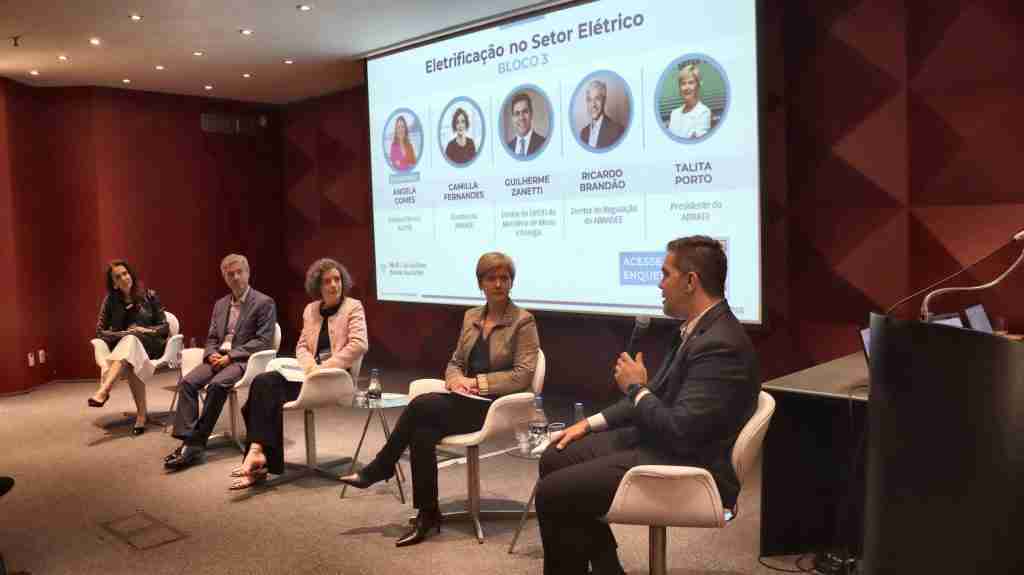
The workshop brought together representatives from the sector to discuss public policy proposals in light of the ongoing transformations. Participants in the opening included Ricardo Brandão, from Abradee; Angela Gomes, from PSR; and Silvia Cabral, from Norte Energia.
Next steps
The two meetings reinforced that electrification, flexibility, infrastructure, and economic signals are all part of the same agenda. Expanding the use of clean electricity can reduce emissions and support a more competitive industry, but this movement depends on prepared grids, integrated planning, updated regulations, financing, and prices that guide efficient decisions.
The insights gathered in the workshops will be incorporated into the next stages of the Electricity Sector Coalition. The cycle will continue with deepening the resilience of infrastructure in the face of extreme weather events and consolidating priority actions to transform the proposals developed collectively into implementation measures.
Download it here Report from the Electricity Sector Coalition
About CEBDS
Founded in 1997, the Brazilian Business Council for Sustainable Development (CEBDS) is a non-profit civil association that works to connect businesses, governments, and civil society to promote sustainable development in Brazil. Its activities cover topics such as climate, energy, sustainable finance, biodiversity, socio-bioeconomy, agri-food systems, social impact, water, and the circular economy.