
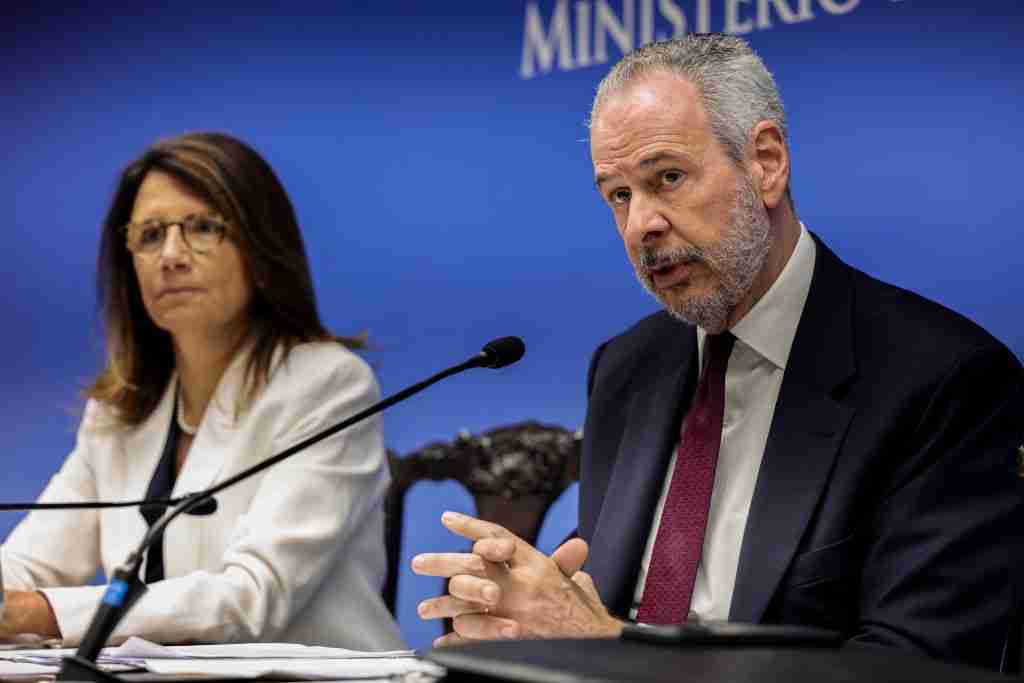
On the official COP30 website, the third letter from the president of COP30, André Corrêa do Lago, proposes the debureaucratization of COPs, focusing on producing effective results to combat climate change.
The document was launched last Friday (23), and addresses facilitation in COP processes, calling for a focus on combating climate change.
Check out the letter in full:
Third letter from the COP30 Presidency
May 23, 2025
Dear friends,
Advancing the global effort against climate change, the Brazilian Presidency of the 30th Conference of the Parties (COP30) of the United Nations Framework Convention on Climate Change (UNFCCC) presents its third letter to the international community, focused on preparations for the 62nd period of sessions of the Subsidiary Body for Scientific and Technological Advice (SBSTA) and the Subsidiary Body for Implementation (SBI). The meetings will take place in Bonn, from June 16 to 26, 2025.
Listening carefully to the views and perspectives of delegates, Parties and other stakeholders, the COP30 Presidency will also address the negotiations that will take place at COP30 later in the year. In subsequent communications, I will also present plans for the Action Agenda and the Leaders’ Summit.
In a context where climate urgency intersects with growing geopolitical and socio-economic challenges, the COP30 Presidency expects all delegations to be guided by three interconnected priorities for SB62 and COP30: (1) strengthening multilateralism and the climate regime under the UNFCCC; (2) connecting the climate regime to people’s real lives; and (3) accelerating the implementation of the Paris Agreement by stimulating action and structural adjustments in all institutions capable of contributing to this goal.
The COP30 Presidency is working to ensure that the negotiations, global mobilization, Action Agenda and Leaders’ Summit contribute to ushering in a new era of delivering on what has already been agreed. The first Global Stocktake of the Paris Agreement (GST) is our guide to Mission 1.5 and our collective blueprint for the vision of the Convention and the purpose and long-term goals of the Paris Agreement, in the context of sustainable development and efforts to eradicate poverty. All public and private actors must work together to fully implement the Paris Agreement based on the outcomes of the GST. This includes global calls to halt and reverse deforestation and forest degradation by 2030 and to accelerate the global energy transition. We must support each other to collectively advance the goals of tripling global renewable energy capacity, doubling the global average rate of improvement in energy efficiency and transitioning away from fossil fuels in energy systems in a fair, orderly and equitable manner.
Achieving these interrelated goals will require more than compromise. It will require a shift in the way we think and work together. Systems thinking—a theme I addressed in my last letter—is the key to exponential cooperation, justice in transitions, and sustainability of outcomes. Just as in our politics, economy, and society—and the planet on which all of this takes place—negotiations also involve an “ecology of perspectives,” equally vulnerable to the risks of tipping points and irreparable damage to decision-making. We hope that the global Task Force will also lead negotiators to engage in the care and repair of this shared ecology in the process we build together. We have the responsibility and the agency to evolve from competition to symbiosis.
Calling on negotiators for the global Task Force
With the Paris Agreement “Rulebook” finalized at COP29 and the multilateral policy cycle fully operational, it will be essential, from SB62 to COP30, to consolidate and expand the institutional and regulatory body collectively achieved under the UNFCCC.
In the run-up to SB62, the COP30 Presidency is working closely with the COP29 Presidency and the Chairs of the Subsidiary Bodies, with the support of the UNFCCC Secretariat, to ensure that the SB62 meetings deliver concrete outcomes that can be taken to COP30 for formal adoption, while ensuring inclusiveness and transparency. It is time to focus the negotiations on re-establishing and improving our process, rebuilding a global trust infrastructure to accelerate and expand results.
The credibility of the multilateral process lies in the hands of the negotiators in Bonn.
We invite all negotiators to act as co-builders of this global infrastructure of trust. Working together as a task force, negotiators can ensure significant progress on SB62 in June. Making progress in Bonn on issues that would otherwise have been left for COP can help avoid the risks and tensions that have eroded mutual trust year after year. The COP30 Presidency calls on negotiators to change the tone in Bonn, avoiding zero-sum confrontation at all costs and favoring an approach of empathy and solidarity, in order to complement each other. Instead of conflict and impasse, mutual listening will allow us to leverage the diversity of perspectives to achieve sophistication in both collaboration and results.
At SB62, we will seek to promote early and sustained engagement of Heads of Delegation (HoDs), starting with a “day zero” of informal talks the day before the official opening of the sessions. We invite HoDs to engage in substantive and constructive exchanges that will provide momentum for progress on outstanding negotiation issues. Particular priority will be given to: (i) the Global Adaptation Goal (GGA) indicators under the UAE–Bethlehem Work Programme, (ii) the UAE Dialogue on Implementation of GST Outcomes, and (iii) the Just Transition Work Programme (JTWP). Additional information on “day zero” will be communicated to the Parties by the secretariat.
The true measure of SB62’s success will not be in tactics, but in our collective ability to communicate meaningful progress to the people we serve. The abstraction of our work needs to start to resonate in concrete experience. Legitimacy will come from real-world relevance and delivery of results.
It would be a huge waste if the first formal negotiating space of the year—the subsidiary bodies in June—were taken over by procrastination or postponement of decisions. Failure to make progress on agreed mandates will further erode confidence in the ability of the multilateral process to deliver the results that humanity needs.
Results that match the challenges
Given the climate urgency, it is essential that all negotiating tracks produce results that are up to the challenge, in order to connect climate ambition with people’s everyday reality. As a cross-cutting axis, the essential link between climate and sustainable development must permeate all areas. Climate policy will only be effective if it promotes socio-economic transformations. The eradication and reduction of poverty, the reduction of inequalities within and between countries, and equity and justice for the most vulnerable must underpin all work streams and negotiating tracks in the COP bodies. All agendas matter when the future is at stake.
Indigenous Peoples and local communities are essential allies in the global response to climate change, building on generations of knowledge and care for nature. As we approach COP30, the Brazilian Presidency highlights the importance of further strengthening effective participation in the Platform of Local Communities and Indigenous Peoples. We emphasize the relevance of intensifying efforts to expand the inclusive engagement of local communities in the Platform’s activities and related processes, building on previous decisions and taking inclusive climate governance to new heights.
Adaptation, the central theme of our June meeting, is the visible face of the global response to climate change and a key pillar for aligning climate action with sustainable development. With the spirit of a task force and political will, our focus will be on delivering tangible benefits for societies, ecosystems and economies through the advancement and completion of the key mandates of this agenda – especially the Global Goal on Adaptation (GGA) and National Adaptation Plans (NAPs). There is a window of opportunity to define a robust framework for monitoring collective progress on adaptation. This milestone will also lay the foundation for the future of the adaptation agenda. Meanwhile, NAPs are evolving beyond planning to become valuable implementation and resource mobilization tools, incorporating risk management, vulnerability reduction and increased adaptive capacities into local and global actions. In this sense, we hope that all countries will present their NAPs before COP30 and use them as strategic guides to build resilience in the years to come.
In view of the adverse impacts of climate change, which are increasing in frequency and intensity worldwide, we must strengthen the institutionalization and interconnection between the three dimensions of loss and damage in the UNFCCC — the Warsaw Mechanism Executive Committee, the Santiago Network and the Loss and Damage Response Fund — while completing the review of the Warsaw Mechanism.
The outcome of the first Global Stocktake has given the world a blueprint for shifting the climate trajectory towards a 1.5°C-aligned future, in a resilient scenario that protects future generations. The UAE Dialogue on implementing the GST outcomes can provide a platform to foster cooperation and ambition. Building on the debate already initiated in Baku, we should seek to launch the Dialogue and support global progress on all the urgent calls made on the GST, especially those with a deadline in this critical decade.
Another pending issue in multilateral talks that should receive significant momentum this year is the Just Transition Work Programme, a dynamic concept of fundamental relevance to people’s lives. We must build on the discussions held at COP29 and demonstrate ambition to define the scope and focus of this powerful concept.
The growing calls from political leaders around the world for a stronger multilateralism will soon be put to the test at SB62. The COP30 Presidency calls on all delegates, groups and observers, civil society representatives, academics and scientists to join forces and pave the way for bold and meaningful decisions across all work tracks. While only a few are mentioned in this letter, I would like to make it clear that all mandates are relevant and all substantive topics under discussion are important for COP30: Climate Finance; Sharm el-Sheikh Work Programme for Mitigation Ambition and Implementation; Transparency; Gender Action Plan; Response Measures; Technology Deployment Programme; Capacity Building; Action for Climate Empowerment; and Arrangements for Intergovernmental Meetings. Strengthening the operational capacity of the UNFCCC Secretariat, through the provision of adequate means, is also a common responsibility of all Parties.
The COPs we want
Recognizing growing calls for change at COPs, the COP30 Presidency invites all Parties to reflect on the future of the process itself. As Parties move from a negotiation-centric to an implementation-centric era, they may wish to intensify their consideration at SB62 of approaches and initiatives to “increase the efficiency of the process with a view to increasing ambition and implementation.” Under the leadership of the SBI Chair, this ongoing work could address issues already identified, such as the excessive number of items on the provisional agendas of COPs and SBs; overlapping topics; time and space constraints for negotiations; and obstacles to the effective participation of small delegations—issues that also put pressure on secretariat resources.
Until these issues are resolved, it would be desirable for Parties to avoid proposing new, potentially controversial agenda items that would further burden the process or undermine agreed priorities.
Looking ahead, the next COPs can represent a new generation of climate conferences: not as isolated diplomatic events, but as systemic platforms to accelerate results, measure progress and engage a broader ecosystem of actors. They should be conceived as points of convergence – where ambition meets alignment and global decisions trigger local transformations.
In responding to the climate urgency, COP30 can be that turning point – the moment when we move beyond the status quo and move boldly towards a future defined by results, solidarity and shared purpose. Together.
André Aranha Correa do Lago,
COP30 President-designate


