
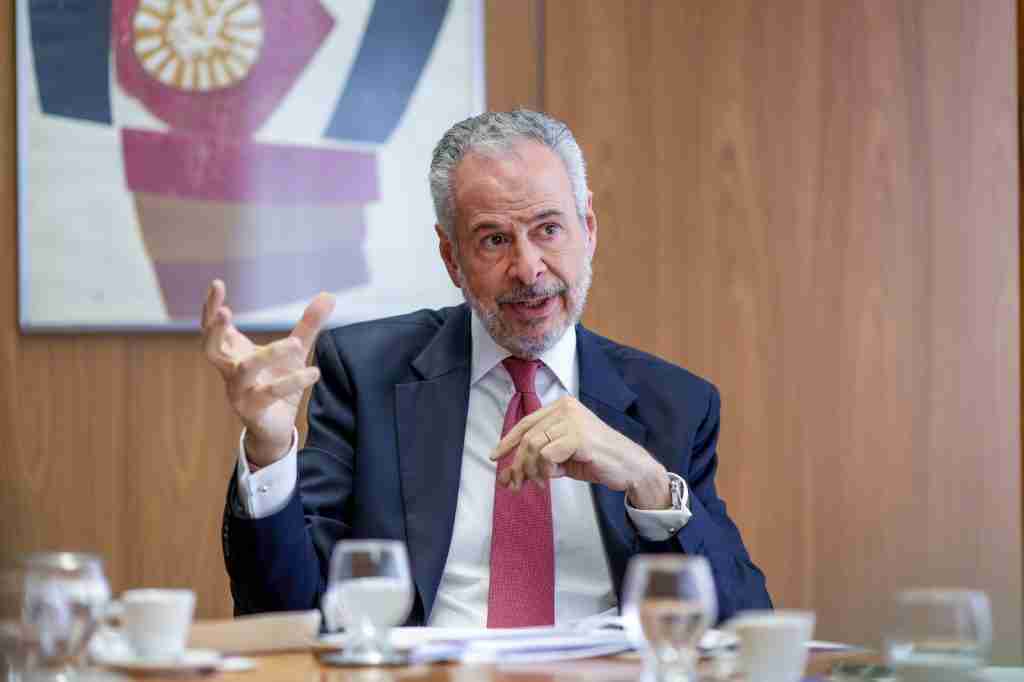
Presented this Thursday (23/10), the Eighth Letter from the COP30 Presidency to the international community is dedicated to climate adaptation, highlighting its importance in protecting people and cities, and its necessity in a future with increasingly greater climate impacts.
Check out the letter in full:
“October 23, 2025
Dear friends,
As we advance our Global Action against climate change, the Presidency of the 30th session of the Conference of the Parties (COP30) to the United Nations Framework Convention on Climate Change (UNFCCC) presents its eighth letter to the international community, this time dedicated to the vital issue of adaptation climate.
In this letter, I invite Parties and other stakeholders to reflect on adaptation through new lenses: as the next step in human evolution.
As the age of warnings gives way to the age of consequences, humanity is confronted with a profound truth: climate adaptation is no longer a choice that follows mitigation; it is the first step toward our survival. At every decisive moment in our evolution, our species has earned its place on this planet through adaptation—learning, innovating, and transforming the very conditions of life. Adaptation has always required the courage to abandon what no longer serves us while preserving what defines us.
Today, this evolutionary truth is urgently revealed again. Evolutionary biology confirms what ancient wisdom has always recognized: survival has never belonged solely to the fittest, but to the most cooperative—those capable of cultivating symbiotic relationships that sustain life in balance. Cooperation has been the essence of our humanity in the process of natural selection.
As President Lula states, COP30 will be the COP of truth, where we will be tested in our ability to set aside differences and confront the climate crisis as the existential threat it represents. Cooperation must once again emerge as the organizing principle of the global response. Our ability to implement the adaptation provisions of the UNFCCC and the Paris Agreement through strengthened international cooperation will determine whether we evolve not only to survive, but to become the best version of humanity—grounded in dignity, justice, and solidarity.
From the Convention's ultimate goal to the Paris Agreement's long-term resilience objective, from the Global Adaptation Goal (GGA) to National Adaptation Plans (NAPs), COP30 must be the COP of adaptation. Ambition and action on adaptation will be essential so that, in Belém, we can advance three priorities: (i) strengthening the multilateralism; (ii) bringing the climate regime closer to the everyday lives of people; and (iii) accelerate the implementation climate.
A dangerous precedent in human evolution
In my first letter, I mentioned that we are entering a dangerous era in which the rich—in both developed and developing countries—isolate themselves behind climate-resilient walls, while the poor remain exposed. Such a future must be rejected outright. It is unethical, immoral, and ultimately self-destructive, as it erodes the very cooperation that made human evolution possible. Yet, we already see signs of this dystopian scenario emerging as a trend.
Unpublished data from the 2025 Global Multidimensional Poverty Index, published by the United Nations Development Programme on October 17, reveal that 1.1 billion people, out of a total of 6.3 billion in 109 countries, live in acute multidimensional poverty—more than half of them children. Of these 1.1 billion, 887 million live in regions already facing at least one major climate risk, and 309 million face three or more risks simultaneously. Empathy compels us to recognize the human lives behind these numbers—small and micro-entrepreneurs losing their businesses and dreams, families displaced by floods, farmers watching their fields dry up, children walking miles in search of water.
Without adaptation, climate change becomes a multiplier of poverty, destroying livelihoods, displacing workers, and deepening hunger. As impacts intensify, inaction represents not a technical failure but a political choice about who lives and who dies. The African philosopher Achille Mbembe denounced this logic as “necropolitics”—the use of power to decide which lives are protected and which are considered disposable. As policymakers and political actors, we are no less responsible for acts of omission.
Adaptation is as vital to protecting economies as it is to preserving human lives. Climate-related disasters already cost Africa between 2% and 5% of GDP each year. In Small Island Developing States (SIDS), a single hurricane can undermine decades of progress, as the devastation wrought by Cyclone Freddy in parts of the Indian Ocean and the Caribbean demonstrated. In Least Developed Countries (LDCs), recurrent droughts and floods—from the Sahel to the Horn of Africa and Southeast Asia—compromise food security, strain public finances, and reverse hard-won development gains. In Latin American countries, climate impacts are also exacerbating inequalities and increasing vulnerabilities.
These are not just environmental crises; they pose fiscal alarms, social fractures, and systemic risks to global stability. Inaction on adaptation triggers instability with global repercussions in the medium and long term. At the same time, national resources that could be allocated to low-carbon and climate-resilient transitions are increasingly consumed by emergency responses. As adaptation gaps widen, the growing burden of loss and damage further reduces fiscal space for long-term investments, especially in developing countries.
Adaptation: Underfunded and Undervalued
In recent months, I've heard voices from all sectors of society—indigenous communities, scientists, economists, civil society, mayors, small farmers, entrepreneurs, insurers, young people, and public servants. This learning process included inspiring dialogues within the framework of the Global Ethical Assessment, led by Minister Marina Silva. From Latin America and Africa to the Pacific and Southeast Asia, mobilization is expanding: renewable energy, policy reforms, nature-based solutions, and community adaptation initiatives are multiplying.
A single message resonates everywhere: a call for urgency and concrete results on adaptation at COP30. People don't speak in acronyms; they speak of flooded homes and lost crops, of local economies collapsing after storms, of destroyed schools and hospitals, of women leading community responses. Behind each story is the same reality: climate impacts are eroding development gains, widening inequalities, and pushing millions of people back into poverty.
We need to break this vicious cycle. Adaptation is not an alternative to development—it is the very essence of sustainable development in a climate-changing world. It strengthens fiscal stability, reduces investment risk, and increases productivity. Every resilient road, every climate-adapted school, every early warning system pays for itself in avoided losses. The World Bank estimates that robust adaptation measures can generate up to four times their cost in economic benefits. Adaptation finance, therefore, should not be seen merely as aid.
Despite successive commitments, adaptation finance still represents less than a third of total climate finance, far below the needs. A chronic lack of investment leaves countries vulnerable, forcing them to divert scarce resources from health, education, and infrastructure to emergency responses and recovery efforts. The imbalance between mitigation and adaptation weakens collective resilience and perpetuates structural inequalities. Many communities already undertake local and experimental adaptation initiatives, but these efforts are often underrecognized, underfunded, and poorly connected to national planning.
Elevating Adaptation – at every level
Sustainable development and the fight against poverty, hunger, and inequality are essential for adaptation, as social cohesion and strong institutions are the greatest drivers of resilience. While many countries and communities are already transitioning to low-carbon and sustainable economies, the emergence of a adaptation economy, capable of shaping new pathways for climate-positive growth and development, has yet to emerge. Additional efforts are needed to fully integrate adaptation into the broader economic transition we all face, ensuring that preventive behaviors and resilience remain at the core of economic policies, public procurement practices, and new financial incentive mechanisms. Nature-based solutions and synergies between climate and biodiversity can accelerate this shift: investing in forests, wetlands, mangroves, and other ecosystems protects nature and strengthens resilient, climate-smart economies.
Scaling up adaptation also requires a strategic mix of financial instruments and more robust international cooperation. In my travels, I have heard repeatedly that accelerating adaptation finance is essential to protect communities and secure development gains—and that this financing needs to be more than doubled, and even tripled, to meet urgent needs. Grants and concessional loans remain critical for all countries, especially those with limited fiscal space, including for the development and implementation of National Adaptation Plans (NAPs).
I encourage countries and institutions to increase the quantity and quality of adaptation finance, ensuring it reaches the most vulnerable. For developed countries, adaptation finance is a smart investment, generating global stability and domestic benefits. For developing countries, adaptation yields results that can attract investment and avoid much higher costs in the future: it saves lives, protects jobs, safeguards infrastructure, and reduces inequalities. Furthermore, it prepares these countries for robust mitigation efforts.
I've also heard concerns about expanding the private sector's role in adaptation finance. These concerns need to be addressed while exploring innovative approaches—such as guarantees and blended finance.blended finance) – to reduce investment risks and attract capital for resilient infrastructure, food systems and water security.
Sovereign and subnational resilience bonds (sovereign and subnational resilience bonds) are directing household savings toward priorities; debt-for-resilience swaps (debt-for-resilience swaps) and loss and damage insurance (loss and damage insurance) alleviate fiscal pressures and accelerate recovery; results-based financing (results-based finance) and revolving funds (revolving funds) increase accountability and ensure lasting impacts. National platforms (country platforms) and Climate Prosperity Plans (Climate Prosperity Plans) help align investments with national strategies. Multilateral development banks, national development institutions, and climate funds—including the Green Climate Fund, the Least Developed Countries Fund, the Climate Investment Funds, and the Adaptation Fund—play central roles in implementing these instruments and aligning them with national priorities.
Effective adaptation also depends on strong multilevel governance, capable of connecting global commitments to local realities. Municipalities and state governments are on the front lines and are often the first to respond. They feel the daily pressure when food shortages, water shortages, or heat waves overwhelm health services. Their leadership is essential to transforming benchmarks into concrete protections for communities, small businesses, infrastructure, and livelihoods. Integrating adaptation into local development plans, ensuring capacity and financing for subnational authorities, makes action more effective, participatory, and people-centered.
A turning point for adaptation at COP30
As I noted in my first letter, a major inflection point on adaptation at COP30 is essential to align the climate change regime with people's real lives, while strengthening multilateralism and accelerating implementation of the Paris Agreement.
COP30 marks the first Conference of the Parties with the Paris Agreement policy cycle in full swing. I welcome the UNFCCC secretariat’s October 21 report on progress in the process of formulating and implementing National Adaptation Plans (NAPs), which shows a decisive shift from the conceptualization and planning phase to the consolidation and implementation phase. This overview can help transition the climate regime from negotiation to implementation, recognizing both progress and gaps, and building on the first Global Stocktake as we prepare for the second, which will be completed in 2028. As of September 30, 2025, 144 developing countries had initiated and launched the NAP process, and 67 developing countries—including 23 Least Developed Countries and 14 Small Island Developing States—had submitted their NAPs to the UNFCCC, along with 11 developed countries. I salute these countries and invite others to join this emerging current of collective resilience, for our international community is only as strong as its weakest link.
With the NAP synthesis as a reference, several adaptation themes will be at the center of COP30: (i) concluding the assessment of NAP progress, examining the results and agreeing on next steps; (ii) advancing the Baku Roadmap for Adaptation (BAR) to accelerate delivery of the Global Adaptation Goal (GGA) through concrete steps; (iii) clarifying how we will collectively close the adaptation finance gap; and (iv) delivering on the GGA and its operationalization through the UAE–Bethlehem Work Program, with concrete and measurable indicators to track the expansion of adaptive capacity, strengthening resilience, and reducing vulnerability. The GGA is not just a negotiating item—it is an economic and moral compass. It guides us to act together, to scale local successes globally, and to integrate adaptation into policies and fiscal planning. Finance ministers and development banks must treat adaptation as a core policy instrument, not as charity.
Beyond negotiations, the COP30 Climate Action Agenda must present concrete solutions, so that Belém is also remembered as the COP for adaptation implementation. We invite all initiatives to bring their best solutions and the highest level of ambition to close gaps in policies and practices—for example, in health, food security, water management, adaptation finance, cities and regions, infrastructure, micro and small businesses, among others.
COP30 is taking place at the epicenter of the climate crisis. Yet, from the advancing waters and the shifting skies, a deeper force emerges—people's determination to protect what they love. In Belém, let us honor this determination and transform it into a global agenda guided by care, not indifference; by interdependence, not individualism; by courage, not resignation. In Belém, where the rivers meet the sea, let us renew the alliance between humanity and nature—transforming vulnerability into solidarity, cooperation into resilience, and adaptation into evolution. Changing by choice, together.
André Aranha Correa do Lago
COP30 President-designate“


