Ir para o conteúdo
  • Press
  • Contact
  • en_US
  • pt_BR
Menu
  • en_US
  • pt_BR
  • About
    • who we are
    • CEBDS
    • Timeline
    • Vision, mission and principles
    • About WBCSD
    • who is part
    • Team
    • Governance
    • Work with us
    • Our Work
    • Thematic Chambers and Working Groups
    • Advocacy
    • Events
    • Initiatives
    • Training
  • Initiatives
    • Thematic Chambers and Working Groups
    • Climate
    • Energy
    • Biodiversity and Biotechnology
    • Sociobioeconomics
    • Social Impact
    • Agrifood Systems
    • Sustainable Finance
    • Water
    • Advocacy
    • Circular Economy
    • initiatives
    • Coalitions for Decarbonization
    • Net Zero Platform
    • Brazil of Solutions
    • Action Platform for Nature
    • Biodiversity Commitment
    • Water Security Commitment
    • UK Pact
    • Vision 2050
    • IBNBIO
    • Business Movement for the Amazon
  • Content Center
    • press
    • Clipping
    • releases
    • Spokespeople
    • Publications
    • Documents
    • News
    • Articles
  • News
  • Associates
  • Events
  • COP31
Pesquisar
Close this search box.
join

ABC of small rural producers

  • Posted in 03/06/2015


The UN has called on Brazil to be the world's main food supplier over the next twenty years. Currently, 70% of the food consumed here is produced by small and medium-sized farmers. This group employs 77% of the workforce in rural areas and owns 90% of registered properties. On the other hand, when we measure territorial extension and revenue, the numbers are reversed: small and medium-sized producers occupy 24.3% of the rural area and account for 40% of the Gross Value of Production, according to the IBGE.

Despite the contradictions, the participation of these producers is essential for the country to overcome the challenge of expanding food production for domestic and foreign markets on a large scale, as well as to reduce the environmental impact of rural activities. It is estimated that food production needs to increase by 60% by 2030 to ensure the supply of the global population.

It will not be an easy task. In order to achieve this increase, achieve good levels of productivity and reduce environmental impacts, small and medium-sized farmers will need financial support and access to new technologies. Only then will they be able to overcome the challenges imposed, especially in the adverse environmental conditions seen today: increased occurrence of droughts and floods, almost always related to climate change; loss of natural pollinators due to deforestation; erosion and loss of soil fertility. If nothing is done, the environmental impacts will affect business, leading to the flight of labor from the countryside and increased pressure on urban centers.

The negative impacts are already being measured. According to the Climate Observatory's Greenhouse Gas Emission Estimation System, Brazilian agricultural production was directly and indirectly responsible for approximately 60% of the country's CO2 and equivalent emissions between 1990 and 2012. As a result of climate problems, researchers at Embrapa estimate that Brazilian agriculture suffered a loss of R$ 10 billion in the 2013 harvest alone.

O Brazilian Business Council for Sustainable Development (CEBDS), with the support of the UN Global Compact, has just released the publication “Financing for Small and Medium-sized Rural Producers”. The study shows small and medium-sized producers options on where and how to obtain financing to expand their production, improve their quality of life, manage the environmental management of their property to comply with legal requirements and, at the same time, contribute to making the production system less impactful to the environment.

According to the publication, there is no shortage of opportunities to help small landowners make a qualitative leap forward by entering little-known market niches. Financing is available for the adoption of a series of initiatives in the field, such as the implementation of technologies aimed at organic agriculture and livestock farming, planting of commercial forests, integrated crop-livestock-forestry (iLPF), direct planting systems, and the treatment and use of animal waste. These are modalities that are part of what has been called Low Carbon Agriculture (ABC).

The publication addressed to small and medium-sized rural producers reinforces the fundamental role of private and state financial institutions, and highlights the importance of technical knowledge to promote and scale up initiatives aimed at sustainability.

Financiamento-para-pequenos-agricultores-rurais

As a result of climate problems, researchers at Embrapa estimate that Brazilian agriculture suffered a loss of R$10 billion in the 2013 harvest alone.

ARTIGO BE_JPEG

Share:

Sign up for our newsletter

Enter your email and receive our content. We respect the privacy of your information by not sharing it with anyone.

Related news

Check out the most current and relevant news to stay on top of what is being debated on the Sustainable Development agenda.

  • Energy Coalition, Coalitions
  • 27/10/2026

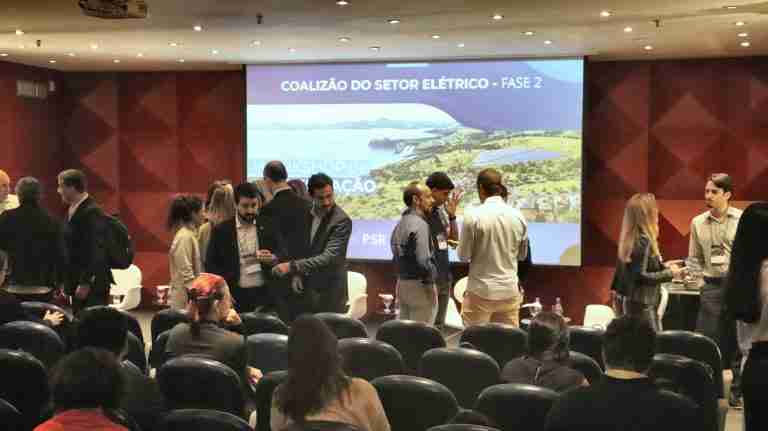
The Electricity Sector Coalition is making progress in discussions on electrification, flexibility, and economic signals.

  • Biodiversity and Biotechnology, COP
  • 20/10/2026

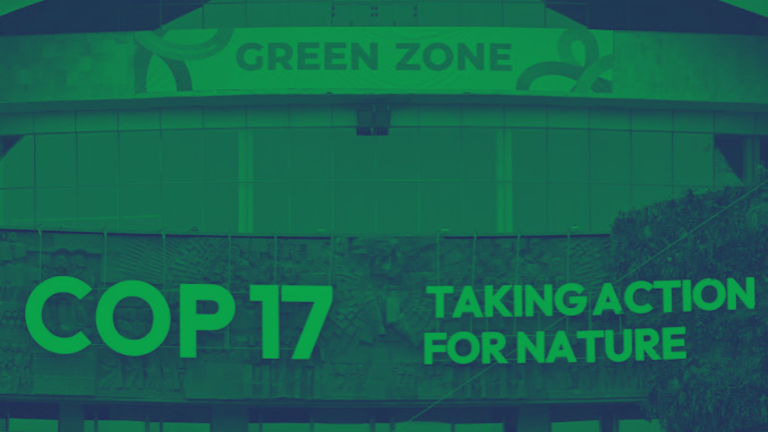
COP17 on Biodiversity 2026 begins in Armenia: follow the main discussions.

  • 13/10/2026

IFRS S1 and S2 advance even with regulatory flexibility.

View more

Related publications

Want to go deeper into this subject? Check here other publications related to this same theme.

  • COP31
  • November 9, 2026

Listen to COP

Pre-COP31 Guide
COP31
  • COP31
Learn more
  • November 5, 2026

Pre-COP31 Guide

The Global Circularity Protocol and the National Circular Economy Strategy
Circular Economy
  • Circular Economy
Learn more
  • November 4, 2026

The Global Circularity Protocol and the National Circular Economy Strategy

IFRS S1 and S2 Guide in Practice
Climate, Energy and Sustainable Finance
  • Climate, Energy and Sustainable Finance
Learn more
  • October 1, 2026

IFRS S1 and S2 Guide in Practice

View more

related events

Check out our upcoming events related to this topic and join us to discuss and share best practices.

Circular Economy

GCP Pilot: 5th Meeting – MEASURE 2 Phase

November 18th
+ learn more
Sustainable Innovation Forum 2026
NYCW

Sustainable Innovation Forum 2026

November 10-11

Climate Action Innovation Zone Antalya, Türkiye

+ learn more
COP31

Accelerating National and Global Decarbonization Through Business Coalition

November 18th

South Africa Pavilion

+ learn more
COP31, Agrifood Systems

Investment in Resilient Supply Chains: Linking Traceability, Emissions, and Finance for Producers

November 16th

Food and Agriculture Pavilion

+ learn more
COP31, Agrifood Systems

From Climate Pathways to Farm-Level Action: Trade, Finance and Agrifood Value Chains

November 16th

Food and Agriculture Pavilion

+ learn more
Coalitions for Implementation in Action: levers to accelerate the climate transition in Brazil
COP31

Coalitions for Implementation in Action: levers to accelerate the climate transition in Brazil

November 19th

Brazil Pavilion - Mutirão Auditorium

+ learn more

View more

THEME CHAMBERS
AND WORK GROUPS

Climate, Energy and Sustainable Finance

Biodiversity and Biotechnology

Amazon

Social Impact

Agrifood Systems

Water

Advocacy

Circular Economy


INITIATIVES

Agrifood Chains

Biodiversity Commitment

Water Security Commitment

COPs

IBNBIO

Business Movement for the Amazon

Action Platform for Nature

Net Zero Platform


ABOUT

CEBDS

Timeline

Vision, mission and principles

WBCSD

how we act

CEBDS advice

Team

Associated companies


CONTENTS

Publications

News

Events

Press


INTEGRITY

code of Conduct

Reporting Channel


CONTACT

+55 21 2483-2250

cebds@cebds.org

CEBDS RJ: São José Street, 40, 3rd Floor. Downtown, Rio de Janeiro, RJ.

CEBDS SP: R. Dr. Virgílio de Carvalho Pinto, 445, 3rd floor Pinheiros, São Paulo, SP.

FOLLOW US

Linkedin Facebook X-twitter youtube Instagram Spotify

BE A MEMBER

Join over 100 business groups working together to accelerate the transition to a sustainable future.

Read more

SUBSCRIBE TO THE NEWSLETTER

Enter your email and receive our content. With this, you authorize the capture, storage and use of data provided in campaigns to disseminate CEBDS publications, events and news by email. Unsubscribing can be requested at any time via descadastro@cebds.org.

Privacy Notice

Terms of use

Cookie Policy

CEBDS. All rights reserved. Copyright 2023© – Produced by Ludus and developed by webinhood.