

National and international experts discussed how geopolitics, new global emissions standards, and the transition to a low-carbon economy are reorganizing production chains and may redefine Brazil's place in the global economy.
Rio de Janeiro, August 27, 2026 — The Brazilian Business Council for Sustainable Development (CEBDS) held, yesterday (26), in Rio de Janeiro, the Sustainable Congress, the main meeting of the business sector before COP31. With the theme “The new game of global competitiveness”, the event brought together national and international leaders to discuss the impacts of climate and geopolitical transformations on the economy, business and development strategies of Brazil.
The program featured some of the leading international experts in climate and economics, such as the former chairman of the UK's Committee on Climate Change, Lord Deben; the CEO of the GHG Protocol, Tim Mohin; the former Director-General of the World Trade Organization (WTO), Roberto Azevêdo; and the economist and member of the Brazilian Academy of Letters, Eduardo Giannetti.
Also participating were the ambassador and president of COP30, André Corrêa do Lago; the CEO of COP30, Ana Toni; the former Minister of the Environment, Izabella Teixeira; and the president of CEBDS and Special Envoy of the Business Sector to COP30, Marina Grossi.
Among the main topics discussed were the relationship between geopolitics and climate, the preservation of flying rivers and the strengthening of water resilience, the role of trust as a strategic asset for companies, changes to the GHG Protocol, and solutions to accelerate the transition to a low-carbon economy.
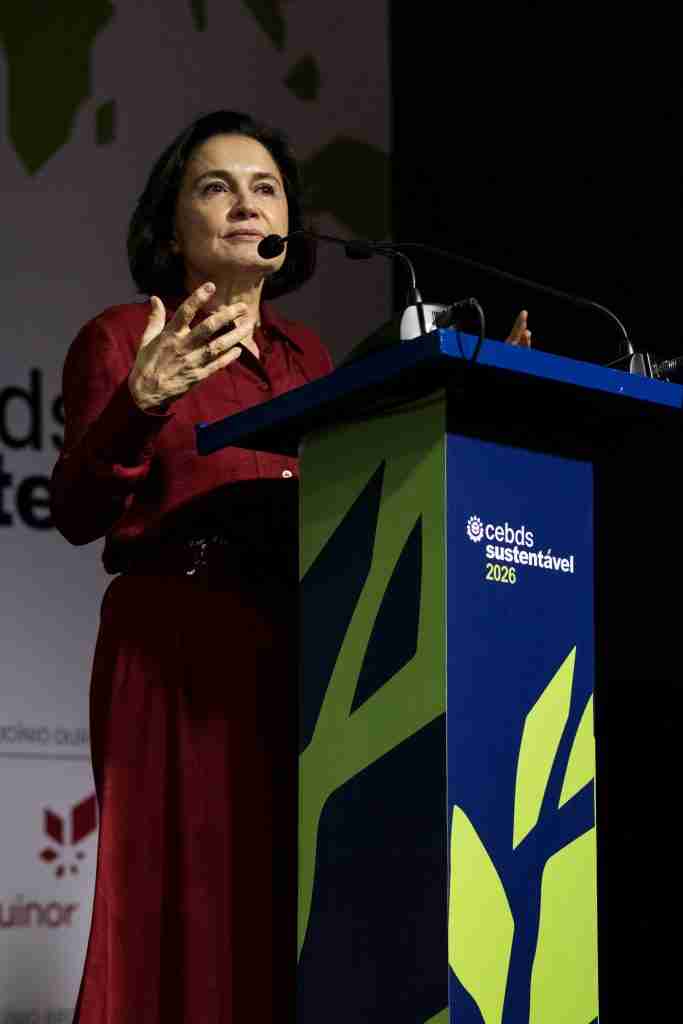
One of the highlights of the program was the panel on the Letter to Presidential Candidates, a document organized by CEBDS with the aim of proposing a long-term agenda for Brazil and pointing out public policies capable of transforming sustainability into a vector of competitiveness, attracting investments and economic development.
The event was sponsored by Equinor, Assaí, Banco do Brasil, Caixa, Vale, and Yara, and had the support of B3, Natura, Grupo Report, Sicredi, and Sicoob.
Key reflections presented at the Sustainable Congress
Marina Grossi, President of CEBDS
“In the private sector, we have the long-term vision that Brazil needs, because the private sector needs to invest for 30, 40 years. It's not just about exporting commodities, but also our critical minerals, our minerals that have value, whether through carbon credits, payment for environmental services, in thousands of ways. We are pricing the asset we have, but we need to move from our comparative advantage to a competitive advantage. This requires technology and investment, and that's why we have a series of projects under discussion with investors, because we need to scale up these investments.”
Lord Deben, former chairman of the UK Climate Change Committee.
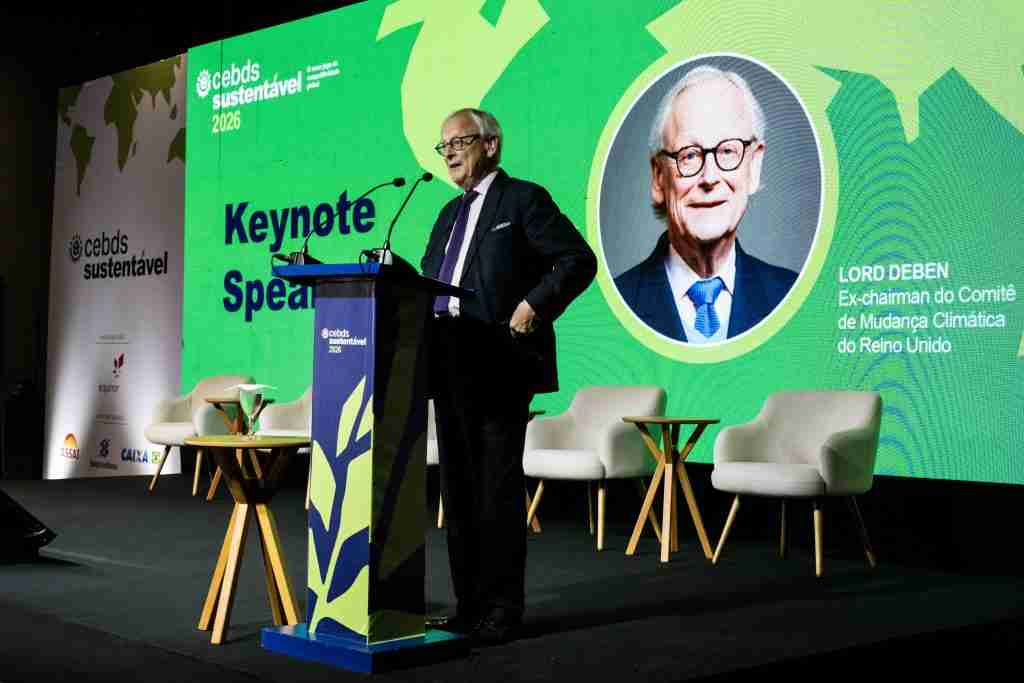
“The world is entirely uncertain. You have absolutely no idea what will happen, and therefore you should always look for certainties. Because if you get the certainties right, you will be strong enough to deal with the uncertainties. And one certainty is climate change. It's not something that's going to disappear. If you don't build your business around these certainties, it will undoubtedly compromise your future.”
“The role of business is to always move forward, ahead of the curve, but while remaining profitable. I fundamentally believe in profit. If you don't have profit, you won't be here tomorrow. And if you're not here tomorrow, you can't continue playing the crucial role that the best companies play in this battle against climate change. So let's not laugh at profit. Profit is crucial.”
Tim Mohin, CEO of GHG Protocol
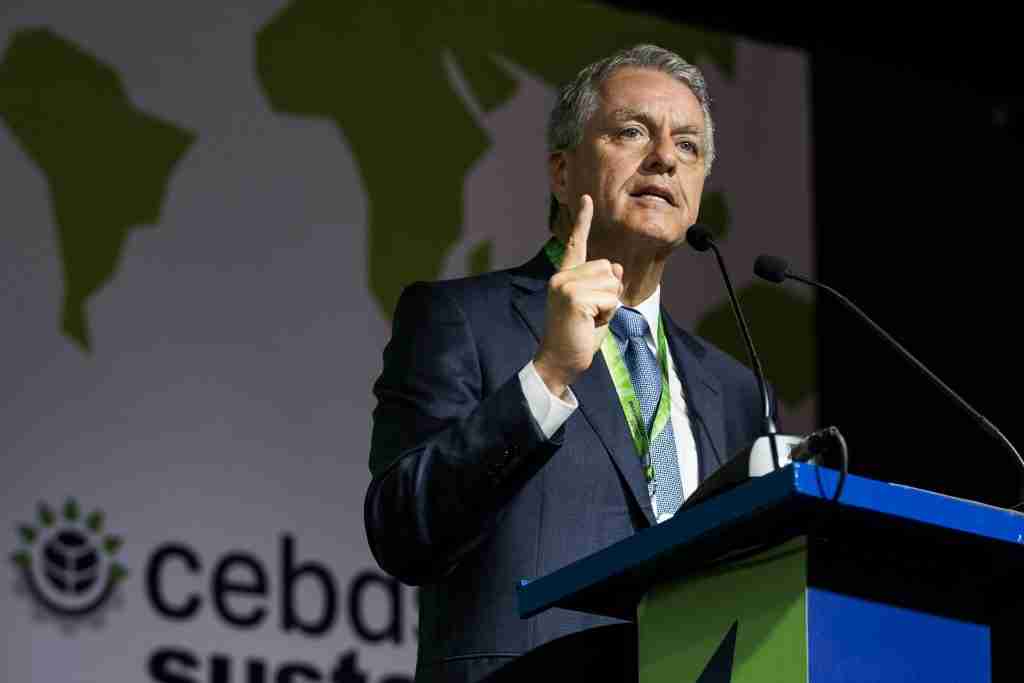
“Standards should not mean more bureaucracy. They should facilitate and accelerate decarbonization. We have partnered with the International Organization for Standardization (ISO) and, just three weeks ago, we announced that all of our corporate inventory standards — Scope 1, Scope 2, Scope 3, alternative measures and instruments, market-based actions and instruments — will be combined into a single standard. This standard will then be integrated into ISO 14064-1. All of this will create a single common global language for carbon inventories worldwide.”
“We need to understand why this transition from voluntary to mandatory disclosure [of carbon emissions] is happening. And it really comes down, once again, to one word: investors. Investors want this information. Why do they want climate information? Because climate change is real. We see it every day. We see the risks, we see the costs, but we also see the opportunities. And, just like any material risk or any material opportunity, this needs to be disclosed in a company's financial information.”
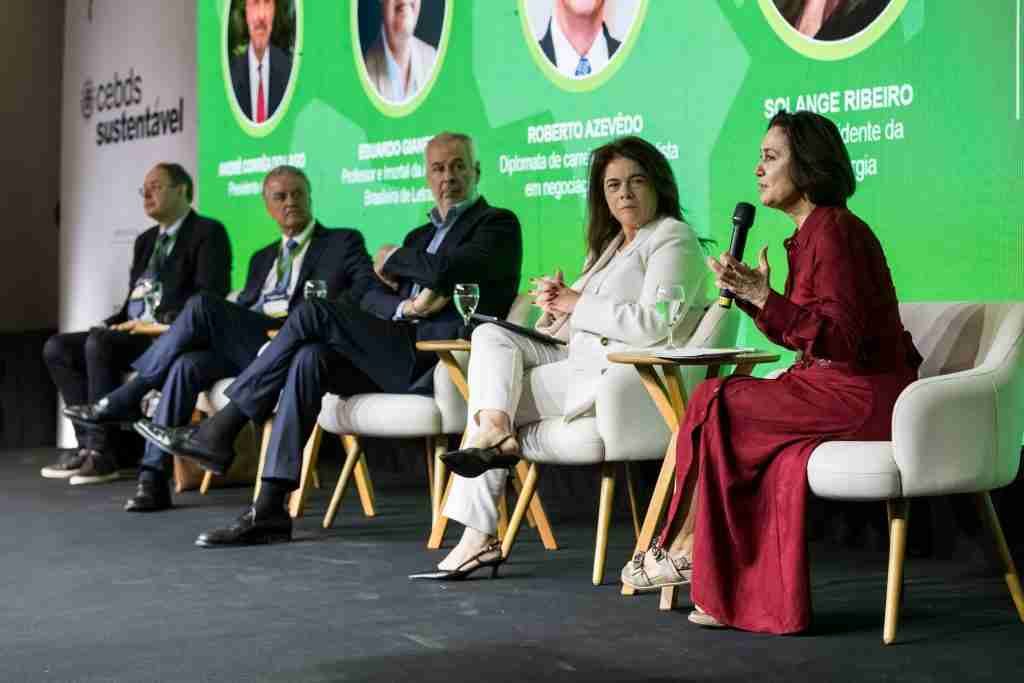
André Corrêa do Lago, president of COP30
“At COP30, we made it very clear that the strict rules were created for negotiation, but not necessarily for implementation. The Action Agenda deals precisely with the implementation of what has already been negotiated. If a decision has already been made and there is a mandate, it is possible to implement it in a viable way. In this process, new groups and coalitions capable of giving more dynamism to climate action come into play. An example is the TFFF, the Tropical Forests Forever Fund, launched by Brazil.”
Eduardo Giannetti, economist and member of the Brazilian Academy of Letters.
“The political polarization we have entered diverts society's attention, public debate, and our real issues and ambitions, transforming the public sphere into a highly charged environment where dialogue is forbidden. Our political polarization has so far failed to create a less toxic environment for us to think about long-term Brazilian issues.”
Roberto Azevêdo, career diplomat and former Director-General of the World Trade Organization (WTO)
“The domestic market and decisions cannot be made by looking only at Brazil. We have to think about the global market. Everything related to climate needs global solutions. Brazilian businesses, agribusiness itself, for example, which is very much at the center of the climate discussion, have to think about the global market, they have to consider that international standards will apply. Market access will also depend on the climate agenda.”
Solange Ribeiro, Vice President of Neoenergia
“Geopolitics has ceased to be merely a political agenda and has become part of the business agenda: where to invest, how to produce, from whom to buy, how to organize the supply chain, and how to work with technological innovations. Climate change has further transformed how we evaluate investments.”
Letter to the Presidential Candidates
During the Sustainable Congress, CEBDS also presented the Letter to the Presidential Candidates, which brings together proposals from the business sector to strengthen Brazilian competitiveness through sustainable development. According to Marina Grossi, building a long-term agenda requires greater coordination between the government and the private sector.
“"For this agenda of ours to become a state agenda, we need better governance, where the private sector is invited not only during implementation and execution, but also to build it."”
“The Charter doesn’t end when it’s delivered to the candidates. It continues within the institution, and our role is to facilitate its concrete implementation. This involves demonstrating the advantages of the proposals, working with metrics and methodologies, and making available studies and tools that contribute to advancing this agenda.”


