Ir para o conteúdo
  • Press
  • Contact
  • en_US
  • pt_BR
Menu
  • en_US
  • pt_BR
  • About
    • who we are
    • CEBDS
    • Timeline
    • Vision, mission and principles
    • About WBCSD
    • who is part
    • Team
    • Governance
    • Work with us
    • Our Work
    • Thematic Chambers and Working Groups
    • Advocacy
    • Events
    • Initiatives
    • Training
  • Initiatives
    • Thematic Chambers and Working Groups
    • Climate
    • Energy
    • Biodiversity and Biotechnology
    • Sociobioeconomics
    • Social Impact
    • Agrifood Systems
    • Sustainable Finance
    • Water
    • Advocacy
    • Circular Economy
    • initiatives
    • Coalitions for Decarbonization
    • Net Zero Platform
    • Brazil of Solutions
    • Action Platform for Nature
    • Biodiversity Commitment
    • Water Security Commitment
    • UK Pact
    • Vision 2050
    • IBNBIO
    • Business Movement for the Amazon
  • Content Center
    • press
    • Clipping
    • releases
    • Spokespeople
    • Publications
    • Documents
    • News
    • Articles
  • News
  • Associates
  • Events
  • COP31
Pesquisar
Close this search box.
join

A 50-year challenge in 15 years will only be overcome if we all work together

  • Posted in 21/09/2017

Launched two years ago, the Sustainable Development Goals (SDGs) were built on the foundations established by Millennium Development Goals (MDGs), in order to complete the work that has begun and respond to new challenges. The new agenda combines, in a balanced way, the three dimensions of sustainable development – economic, social and environmental – and covers topics such as the environment, gender equality, eradication of hunger, access to health and education, responsible consumption, inclusive economic growth, among others.

The success of the SDGs will depend on a global partnership and the active participation of governments, civil society and the private sector. As the main conduit between business and the UN, the Global Compact has the mission of engaging the private sector in achieving the 17 Goals and their 169 targets by 2030.

This engagement is necessary not only because of the growing pressure for business practices that have less impact on the environment and human rights, but also because of the business opportunity that achieving the agenda can represent. According to the report Better Business Better World, released in 2017 by Business and Sustainable Development Commission, boosting sustainable business models in favor of the SDGs can create an economic window of opportunity of around US$1.4 trillion, increasing job creation by 380 million jobs by 2030.

For this to happen, private sector engagement with this agenda cannot be marginal. Companies need to internalize the SDGs into their core business, that is, in its strategy, seeking to realistically understand its positive and negative impact on the 17 Objectives. In this sense, an interesting tool is the SDG Compass. Released in 2015 by United Nations Global Compact, World Business Council for Sustainable Development It is Global Reporting Initiative, O SDG Compass presents five steps that represent corporate maturity in the face of this new agenda. At a local level, this guide is the focus of a training developed and offered by the Global Compact Brazil Network, CEBDS and GRI, which has already impacted more than 500 people since 2016.

Another action developed locally by Rede Brasil is the dissemination of content on business engagement with the SDG agenda. We recently published the study Integrating the SDGs into Corporate Strategy – A Contribution from the Brazilian Global Compact Committee to the 2030 Agenda, whose purpose was to learn about the efforts and challenges of 21 companies from the Brazilian Committee of the Global Compact, responsible for managing the initiative in Brazil, in the face of implementing the 17 Global Goals in their strategy.

The results of the study show that half of the sample has already considered the SDGs when reviewing their business strategy. The majority understand that alignment with the agenda helps to strengthen relationships with partners, in addition to enabling dialogue with the government. Another highlight is that 43% of the participants have already communicated the SDGs internally and are measuring the impacts of their actions.

I reiterate the UN's premise in defending that Agenda 2030 belongs to everyone and no one can be left behind. Therefore, the private sector represents an essential part of this mechanism, and companies must seek to adjust their agenda with the SDGs. According to the SDG Compass, the organization can start by working on a single – or a few – SDGs, perhaps the one that has the most direct relationship with its core business. But it is essential to identify how the chosen SDG(s) can affect the others, that is, one must not lose the systemic vision that they are all interconnected.

After all, it is a 50-year challenge in 15. Join us in this endeavor.
Share:

Sign up for our newsletter

Enter your email and receive our content. We respect the privacy of your information by not sharing it with anyone.

Related news

Check out the most current and relevant news to stay on top of what is being debated on the Sustainable Development agenda.

  • Energy Coalition, Coalitions
  • 27/10/2026

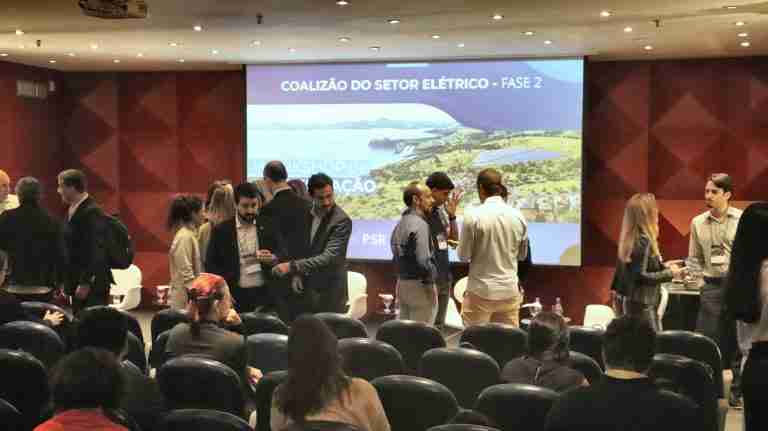
The Electricity Sector Coalition is making progress in discussions on electrification, flexibility, and economic signals.

  • Biodiversity and Biotechnology, COP
  • 20/10/2026

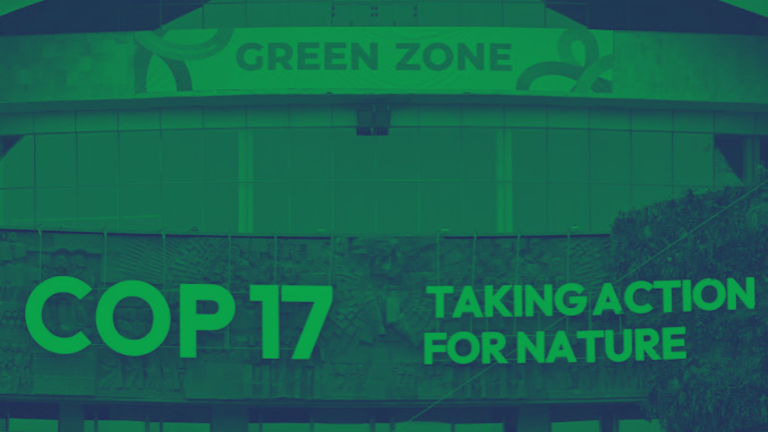
COP17 on Biodiversity 2026 begins in Armenia: follow the main discussions.

  • 13/10/2026

IFRS S1 and S2 advance even with regulatory flexibility.

View more

Related publications

Want to go deeper into this subject? Check here other publications related to this same theme.

  • COP31
  • November 9, 2026

Listen to COP

Pre-COP31 Guide
COP31
  • COP31
Learn more
  • November 5, 2026

Pre-COP31 Guide

The Global Circularity Protocol and the National Circular Economy Strategy
Circular Economy
  • Circular Economy
Learn more
  • November 4, 2026

The Global Circularity Protocol and the National Circular Economy Strategy

IFRS S1 and S2 Guide in Practice
Climate, Energy and Sustainable Finance
  • Climate, Energy and Sustainable Finance
Learn more
  • October 1, 2026

IFRS S1 and S2 Guide in Practice

View more

related events

Check out our upcoming events related to this topic and join us to discuss and share best practices.

Circular Economy

GCP Pilot: 5th Meeting – MEASURE 2 Phase

November 18th
+ learn more
Sustainable Innovation Forum 2026
NYCW

Sustainable Innovation Forum 2026

November 10-11

Climate Action Innovation Zone Antalya, Türkiye

+ learn more
COP31

Accelerating National and Global Decarbonization Through Business Coalition

November 18th

South Africa Pavilion

+ learn more
COP31, Agrifood Systems

Investment in Resilient Supply Chains: Linking Traceability, Emissions, and Finance for Producers

November 16th

Food and Agriculture Pavilion

+ learn more
COP31, Agrifood Systems

From Climate Pathways to Farm-Level Action: Trade, Finance and Agrifood Value Chains

November 16th

Food and Agriculture Pavilion

+ learn more
Coalitions for Implementation in Action: levers to accelerate the climate transition in Brazil
COP31

Coalitions for Implementation in Action: levers to accelerate the climate transition in Brazil

November 19th

Brazil Pavilion - Mutirão Auditorium

+ learn more

View more

THEME CHAMBERS
AND WORK GROUPS

Climate, Energy and Sustainable Finance

Biodiversity and Biotechnology

Amazon

Social Impact

Agrifood Systems

Water

Advocacy

Circular Economy


INITIATIVES

Agrifood Chains

Biodiversity Commitment

Water Security Commitment

COPs

IBNBIO

Business Movement for the Amazon

Action Platform for Nature

Net Zero Platform


ABOUT

CEBDS

Timeline

Vision, mission and principles

WBCSD

how we act

CEBDS advice

Team

Associated companies


CONTENTS

Publications

News

Events

Press


INTEGRITY

code of Conduct

Reporting Channel


CONTACT

+55 21 2483-2250

cebds@cebds.org

CEBDS RJ: São José Street, 40, 3rd Floor. Downtown, Rio de Janeiro, RJ.

CEBDS SP: R. Dr. Virgílio de Carvalho Pinto, 445, 3rd floor Pinheiros, São Paulo, SP.

FOLLOW US

Linkedin Facebook X-twitter youtube Instagram Spotify

BE A MEMBER

Join over 100 business groups working together to accelerate the transition to a sustainable future.

Read more

SUBSCRIBE TO THE NEWSLETTER

Enter your email and receive our content. With this, you authorize the capture, storage and use of data provided in campaigns to disseminate CEBDS publications, events and news by email. Unsubscribing can be requested at any time via descadastro@cebds.org.

Privacy Notice

Terms of use

Cookie Policy

CEBDS. All rights reserved. Copyright 2023© – Produced by Ludus and developed by webinhood.