
Event reinforces the strength of the articulation between public and private sectors in the face of the macropolitical scenario
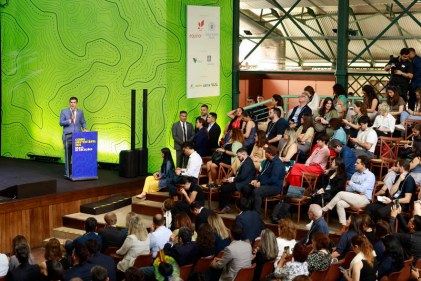
At a time when global geopolitics is undergoing accelerated and challenging transformations for the climate agenda, the 12th edition of the Sustainable Congress, promoted by the Brazilian Business Council for Sustainable Development (CEBDS), brought together 300 people on July 1st and 2nd in Belém, Pará, to discuss concrete paths toward a green, fair economy integrated with the Amazon rainforest and society. Among business leaders, government representatives, and experts, the event featured the CEO of COP 30, Ana Toni; the governor of Pará, Helder Barbalho; and international relations professor Oliver Stuenkel, who presented analyses of the opportunities generated by the transition of the global order.
"How can we use Brazil's competitiveness to contribute to the world? How can we leverage our clean energy matrix to make Brazilian steel greener? In agriculture and livestock, we are modernizing methods to generate even more benefits for the country. We need to lay the foundations to respond to the call of the decade of implementation. The pre-COP and the Sustainable Congress exist for this," said Marina Grossi, president of CEBDS and Special Envoy for the business sector at COP30, during the event's opening.
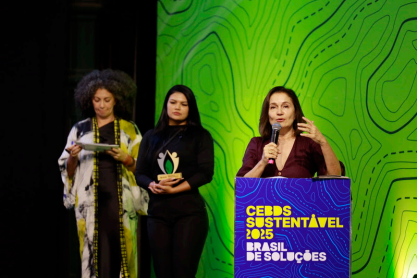
Four months before COP 30, the event reinforced the importance of collaboration between the public and private sectors in building ambitious and viable climate solutions capable of making Brazil a reliable and neutral hub amid tensions between major powers such as the US and China. The meeting highlighted Brazil's potential for global leadership by investing in the valorization of biodiversity, strengthening the bioeconomy, and implementing integrated climate, nature, and society policies.
The Gasômetro Theater, in Parque da Residência, also hosted an exhibition featuring 65 initiatives promoted by CEBDS member companies. This initiative is part of the ongoing survey that will culminate in the "Brazil Solutions Portfolio," a document with implemented and scalable actions, which will be delivered to the Brazilian government during the global summit in November. So far, 135 initiatives have been mapped.
Journey towards COP 30

One of the highlights was the meeting between COP30 CEO Ana Toni, Pará Governor Helder Barbalho, and Marcelo Brito, COP30's envoy for the Amazon states. Fresh from London Climate Action Week and the Bonn Climate Conference, Ana highlighted the gap between the pace of political negotiations and the progress of practical actions.
"Geopolitics isn't helping. Unlike in other times, the driver of climate change won't come from the top down. International negotiations are increasingly difficult. Transformation will come from businesses, consumers, indigenous peoples, and governors. This COP needs to be one of acceleration of implementation," said Ana Toni.
Helder Barbalho added: enforcement actions alone will not be enough to curb deforestation in the long term. "Many focus solely on conservation. But to ensure scale and permanence, the standing forest must have more value than the felled forest. We need to reconcile the trees with the people who live beneath their canopies—otherwise, social conflict will be a major obstacle to environmental preservation," the governor declared.
Roots of prosperity
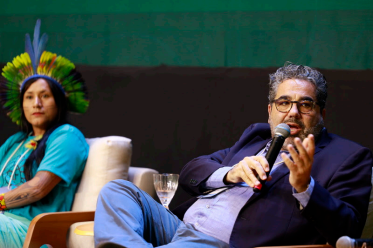
During the panels, it was emphasized that it is possible to drive sustainable development from the Amazon—as long as there is coordination, investment, and regulatory clarity. "There will be no climate transition without a thriving economy in Brazil," stated Marcelo Furtado, head of Sustainability at Itaúsa. He advocated for the valorization of natural assets as a way to ensure prosperity based on regenerative models.
The presence of international voices also reinforced CEBDS's role as a champion of the sustainable transition. Tony Goldner, CEO of the TNFD (Taskforce on Nature-related Financial Disclosures), warned that nature-related risks are already directly affecting companies' financial results and called on the Brazilian private sector to respond strategically. "In economies like Brazil's, there is no cash flow without the flow of nature," he stated.
With discussions on bioeconomy, regenerative agriculture, resilient infrastructure, and energy security, the Sustainable Congress 2025 reinforced that tackling the climate emergency requires scalable solutions and lasting alliances across sectors.
By bringing together key players in sustainable transformation and some of the country's largest companies, CEBDS reaffirms its role as a catalyst for climate action and a bridge builder between businesses, governments, and civil society. The Congress is an essential part of Brazil's journey toward COP30—and the future.
The Sustainable Congress 2025 was sponsored by Equinor, Philip Morris, Vale, Yara, Banco da Amazônia, Banco do Brasil, Caixa and the Federal Government.
Female Leadership – 8th Edition of the CEBDS Female Leadership Award
During the Congress, CEBDS also held the award ceremony for the 8th edition of the CEBDS Women's Leadership Award, which recognizes professionals from member companies who stand out for promoting gender equality and leadership in initiatives aligned with the Sustainable Development Goals (SDGs), with a special focus on SDG 5 (gender equality).
This year's winners were Juliana de Lavor Lopes, Director of ESG, Communications and Compliance at AMAGGI; Suelen Joner, Head of Sustainability and Diversity & Inclusion at Azzas 2154; and Bruna Mesquita, Sustainability Manager for Michelin in South America.
"It means a lot to me. I deeply admire CEBDS, both for the issues it promotes and for Marina Grossi's leadership. May COP30 be a milestone and allow us to dream of a Brazil where the socio-bioeconomy is at the center of the economy," said Bruna, who has worked at Michelin for 13 years. The trajectories of the three winners demonstrate that it is possible to align innovation, socio-environmental impact, and inclusion in business. Their work ranges from combating deforestation to structuring regenerative supply chains, including incorporating socio-environmental goals into corporate strategy. Leading the issue at Latin America's largest fashion group, Suellen has ambitious corporate goals: ensuring 100% of leather traceability by 2030.
"Receiving an award from an institution I've respected, followed, and learned from since the beginning of my career is incredibly meaningful. Being a woman, working with sustainability, and operating in such a challenging and complex environment as fashion adds an extra layer of satisfaction to this recognition," said Suellen, who has worked with ESG at Latin America's largest fashion group for five years.
The award in Belém reinforces CEBDS's commitment to diversity and gender equity, with 701 TP3T on its team being women. Diversity and inclusion agendas are at varying stages across Brazilian companies and sectors. The Maggi executive highlights the benefits that female leadership can bring to businesses.
"We talk a lot about COP 30, but little about the aftermath, which is so important. We have a long way to go in Brazil, especially considering Netzero by 2050. We are an agricultural powerhouse, and we need to be seen as an agricultural-environmental powerhouse. The involvement of women in agriculture in the coming years can greatly help achieve these goals," Juliana Lopes concluded to applause.




