
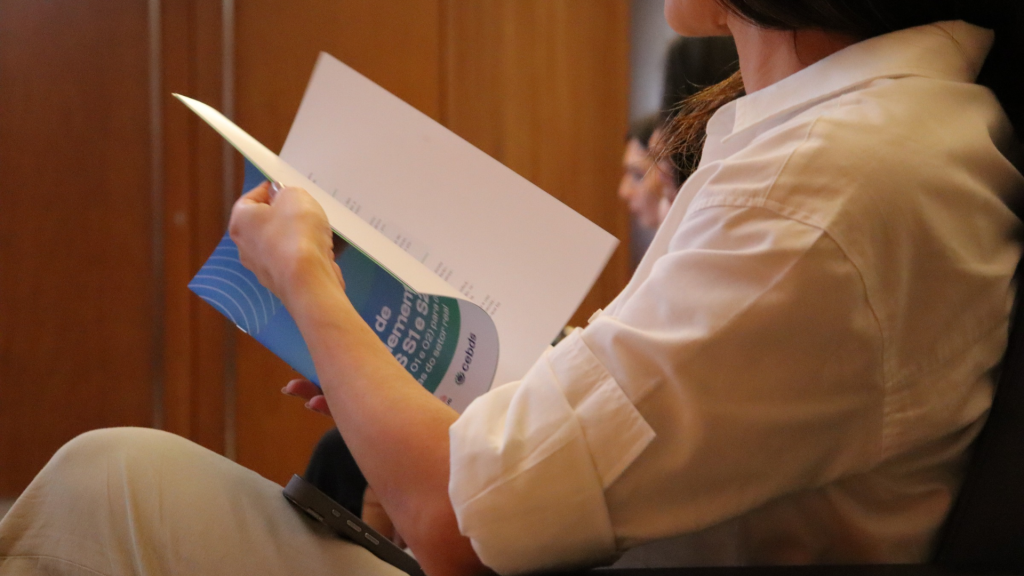
CEBDS's new guide helps companies transform sustainability and climate information into consistent data for risk management and financial decisions.
What is a Sustainability Report and why is it important?
Sustainability reporting is the process by which an organization communicates how environmental, social, and governance aspects relate to its strategy, operations, and results. More than just a periodic publication, it contributes to transparency, accountability, and dialogue with investors, customers, employees, regulators, and other stakeholders. When supported by consistent, comparable, and traceable data, the report also supports risk and opportunity management and enhances the company's ability to incorporate sustainability factors into financial and strategic decisions.
The debate on the disclosure of financial information related to sustainability has entered a new phase. Brazil and the United Kingdom have relaxed the mandatory application of IFRS S1 and S2 standards for publicly traded companies, but have maintained these standards as a benchmark for producing comparable and useful information for investors.
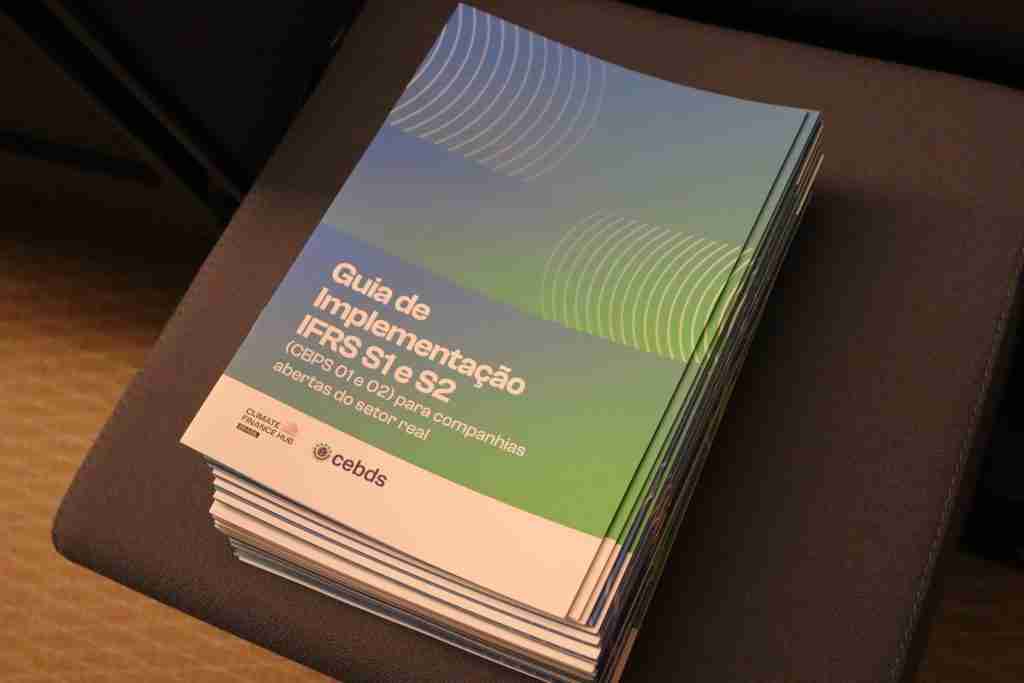
Amid regulatory changes, the Brazilian Business Council for Sustainable Development (CEBDS) launched the IFRS S1 and S2 Guide in Practice. The publication presents ways to connect sustainability risks and opportunities to accounting, finance, risk management, and business strategy.
The guide was developed from a journey promoted by CEBDS and Climate Finance Hub Brazil, which brought together more than 50 organizations in 2026. The content addresses financial materiality, governance, data quality and traceability, financial effects and assurance, in addition to presenting an accounting connection methodology and examples from Brazilian companies.
What are IFRS S1 and S2?
Published in June 2023 by the International Sustainability Standards Board (ISSB), linked to the IFRS Foundation, the standards seek to establish a global basis for sustainability financial disclosures.
IFRS S1 addresses sustainability-related risks and opportunities that may affect a company's cash flow, access to financing, or cost of capital in the short, medium, or long term. IFRS S2 applies this approach specifically to climate risks and opportunities, including physical and transition risks.
Both standards structure information around four pillars: governance, strategy, risk management, metrics, and goals. Their focus is on information considered material to investors and other capital providers.
In practice, adoption requires more than simply adding indicators to a sustainability report. Companies need to establish connections between environmental and social data, financial statements, strategic planning, and investment decisions.
United Kingdom adopts flexible model.
In September, the Financial Conduct Authority (FCA), the UK authority responsible for regulating the financial market, published its definitive rules for aligning the disclosures of listed issuers with the UK Sustainability Reporting Standards, the British version based on ISSB standards.
During the public consultation, the FCA had proposed making climate disclosures corresponding to IFRS S2 mandatory. The final decision, however, adopted the model. comply or explain, or “comply or explain”, both for climate information and for other sustainability issues.
This means that issuers covered by the rules may choose not to submit certain information, but they will have to explain in their annual report which requirements were not met, the reasons for this, and, where applicable, the next steps to improve reporting.
The new rules will apply to fiscal years beginning on January 1, 2027, with the first reports published in 2028. The FCA also established transition periods for information on Scope 3 emissions and for the broader disclosures of IFRS S1.
The decision was made following concerns about costs, implementation capacity, and the competitiveness of the British market. At the same time, the authority maintained its understanding that high-quality climate and sustainability information is relevant for risk pricing and capital allocation.
Brazil also reviewed the mandatory nature of the vaccination.
In Brazil, the Securities and Exchange Commission (CVM) had established, through CVM Resolution 193, the mandatory adoption of ISSB standards by publicly traded companies starting with fiscal years beginning in 2026.
In May 2026, CVM Resolution 244 removed this mandatory requirement and maintained voluntary adoption. Companies that decide to publish sustainability financial information must comply with the standards of the Brazilian Committee for Sustainability Pronouncements (CBPS) and the ISSB and maintain disclosure for at least three consecutive fiscal years.
From January 1, 2027, publicly traded companies that choose not to file the report must justify their decision in a statement to the market. The Brazilian model, called by the CVM (Brazilian Securities and Exchange Commission) "comply or explain," is similar to the logic later adopted by the United Kingdom, although there are differences in the procedures and scope of the two regulations.
The change at the CVM (Brazilian Securities and Exchange Commission) does not conclude the regulatory agenda in the country. The Central Bank, the Superintendence of Private Insurance (Susep), and the National Superintendence of Complementary Pension Plans (Previc) have their own initiatives related to the management and disclosure of environmental, social, and climate risks. The regulatory environment, therefore, remains in evolution and may produce different requirements for different sectors.
Report quality gains importance.
Easing the mandatory reporting requirements does not eliminate the market demand for reliable information. Investors, financial institutions, insurance companies, rating agencies, and members of the value chains continue to use sustainability data to analyze risks, price assets, and guide decisions.
O Reporting Matters Brazil 2025, The study, developed by CEBDS, offers a snapshot of this maturation. The third edition analyzed 82 corporate reports and found that 84% underwent some level of external audit. The survey also showed that 99% of the companies used at least one global reporting standard or tool.
In this context, CEBDS's two areas of activity are complementary. The Thematic Chamber of Sustainable Finance supports the technical preparation and integration of sustainability information into financial decisions. Reporting Matters monitors the quality and evolution of reports published by companies, identifying advances and challenges related to strategy, governance, control, and credibility.
From compliance to business decision-making.
The approach presented by the new guide stems from the understanding that the value of IFRS S1 and S2 does not depend solely on their legal obligation. Consistent climate and sustainability data allows for the identification of exposures, anticipation of financial impacts, improved investment decisions, and engagement with the capital market.
This transformation requires coordinated participation from the areas of sustainability, accounting, finance, risk, auditing, strategy, and governance. It also demands control systems capable of demonstrating the origin, methodology, and consistency of the information disclosed.
Even in a more flexible regulatory environment, companies that advance in this integration will be better prepared to respond to investors, regulators, and business partners, and to understand how sustainability risks affect their financial prospects.
O IFRS S1 and S2 Guide in Practice It is available on the CEBDS website.



