
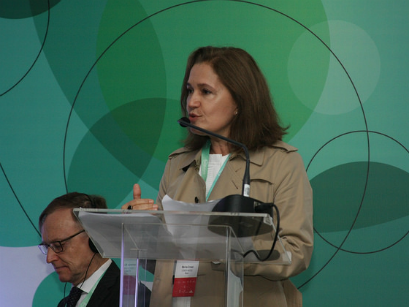
With the aim of stimulating the creation of a low-carbon bioeconomy and thinking about the best ways to make it possible, the I Biofuture Summit occupied the halls of Estanplaza International, in São Paulo, on October 24th and 25th. The event brought together around 300 representatives from 26 countries and was marked by the presentation of Biofuture Platform and for the first roadshow of below50 in South America.
The president of the Brazilian Business Council for Sustainable Development (CEBDS), Marina Grossi, participated in the opening of the event and highlighted that the search for low-carbon solutions in the energy and transport sectors is essential to achieving the goals agreed upon in Brazil's Nationally Determined Contribution (NDC). “The business sector has all the conditions to lead this process and pressure the government to ensure progress in the regulatory frameworks and national policies, which currently represent a bottleneck for the development of the bioeconomy,” she emphasized.
The Minister of Foreign Affairs, Aloysio Nunes, drew attention to one of the great challenges that the world faces: exponentially increasing the production and use of bioenergy, in order to guarantee the limits agreed in Paris.
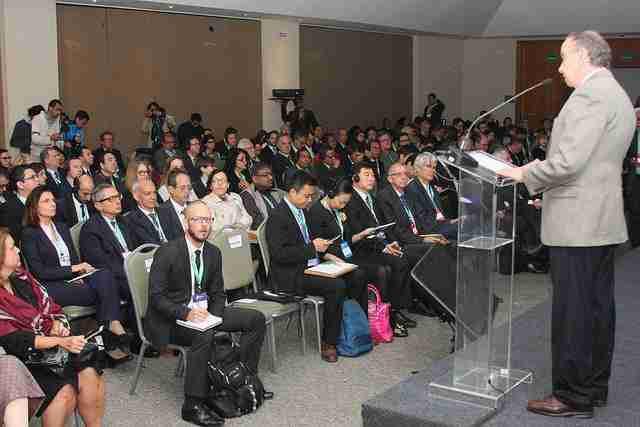
“The modern bioeconomy is capable of mitigating greenhouse gases and bringing countless benefits to society. It can add value and productivity to agriculture, enable the use of urban and rural waste, ensure energy security and access to energy, in addition to being a prosperous source of business. The bioeconomy is already moving € 22 billion”, he justified.
The minister also spoke about the Biofuture Platform, whose interim secretariat was assumed by Brazil. “The platform will be a catalyst for efforts towards a low-carbon economy,” he stressed.
The governor of the State of São Paulo, Geraldo Alckmin, presented the state's experience in stimulating the use of biofuels, especially ethanol. "We want to contribute our efforts to this global need for a low-carbon economy. The experience of the bioeconomy shows that we can act on the issue of energy and fuels, but we need to stimulate this process more quickly. That is why we have given great support to the RenovaBio, Brazilian program to stimulate biofuels”, he stated.
Roberto Jaguaribe, president of ApexBrasil, explained that it is possible to combine social development with increased production capacity. “A study of Climate Bonds Initiative showed that areas where sugarcane plants were built in Mato Grosso do Sul benefited from environmental preservation. Generating income in these areas makes a difference in the conservation and protection of the environment, because poverty tends to degrade nature,” he pointed out.
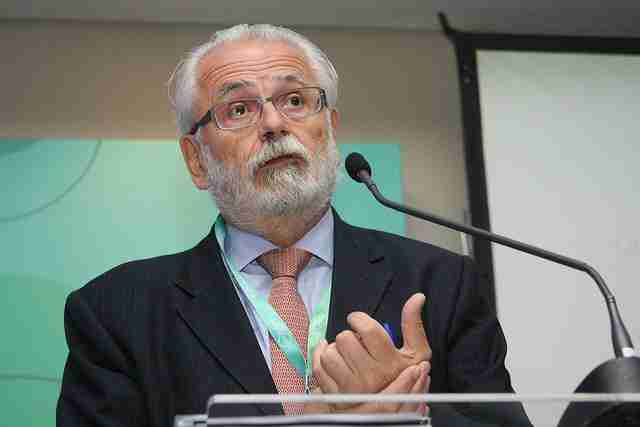
In a video statement, the CEO of Sustainable Energy for All (SEforALL), Rachel Kyte, highlighted the importance of Brazil in the Paris Agreement negotiations and recalled that Sustainable Development Goals (SDGs) They argue that improving people's quality of life necessarily involves ensuring accessible, sustainable and modern energy.
The Deputy Director General of the International Renewable Energy Agency (IRENA), Sakari Oksanen, added that bioenergy is essential to achieving the SDGs. Paul Simons, Deputy Executive Director of the International Energy Agency (IEA), stated that our country is seen as a key player in building a more sustainable world. “Brazil presents several innovative, safe and affordable solutions for the global energy future,” he acknowledged.
Panels highlight opportunities and challenges
After the opening, two panels were held to discuss climate scenarios and the main challenges for the development of the global bioeconomy. Moderated by Christian Zinglersen, head of the Clean Energy Ministerial Secretariat (IEA), the debate “Climate scenarios and the need to expand the advanced bioeconomy” highlighted the urgency of developing the bioenergy market on its various fronts, from production to consumption, respecting regional differences.
Paolo Frankl, head of the IEA's Renewable Energy Division, stressed that biofuels are essential to achieving the goals of the Paris Agreement. “Even if all NDCs are met, it will be difficult to achieve the goals agreed upon at COP21. The main challenge ahead is to increase the share of biofuels in the global energy mix by 2030 on a large scale.” For him, the way forward is to expand the development of technologies.
Bernardo Gradin, CEO of Granbio, brought the industry’s perspective to the debate. “Decarbonization offers a broad spectrum of business opportunities, but there is a lack of programs and policies that stimulate the production and demand for biofuels,” he argued. The panel also included the participation of Sakari Oksanen.
The second panel – Overcoming current challenges and structuring future policy options – moderated by the Director General of Sustainable Development, Energy and Climate of the Italian Ministry of the Environment, Francesco LaCamera, had as its main issue the debate on concrete solutions to overcome barriers, especially legislative ones.
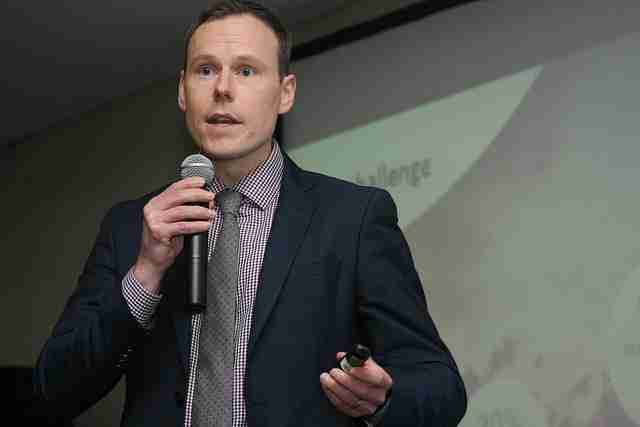
Rasmus Valanko, Director of Climate and Energy at World Business Council for Sustainable Development (WBCSD), presented the below50, a project that seeks to create demand for fuels that, like ethanol and biodiesel, emit 50% less CO2 than traditional fuels. For him, intersectoral and inter-country collaboration is essential for the market to advance. “Saying what needs to be done is no longer enough, we need to know how to do it and what below50 brings this perspective”, he declared.
Plinio Nastari, civil society representative on the National Energy Policy Council (CNPE), delved deeper into the debate on RenovaBio. “The program proposes regulation based on two pillars: the introduction of energy efficiency in the use and production of bioenergy; and the recognition of the mitigation capacity of each biofuel. Through this stimulus, RenovaBio will bring competitiveness to our companies and lower prices for consumers,” he explained.
The panel also had contributions from chair of IEA Bioenergy, Kees Kwant; and the chair of the Biofuels Working Group of the Ministry of Petroleum and Gas of India, Ramakrishna YB
The role of industry in the bioeconomy
During the afternoon of Tuesday (24), the Summit participants were divided into three parallel panels, with the aim of examining topics related to the bioeconomy, such as the construction of public policies and the development of biofuels and low-carbon bioproducts.
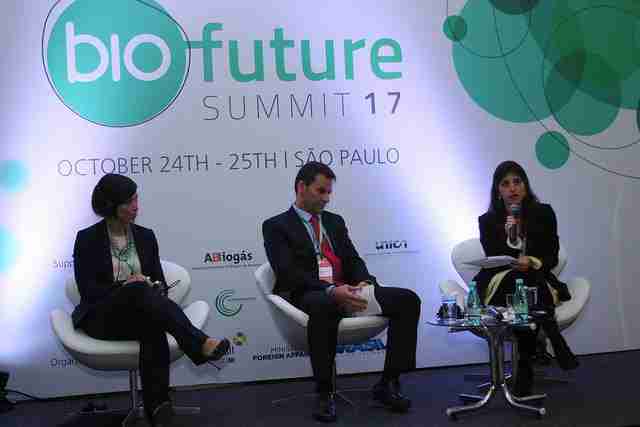
The panel “Industrial Development in the Bioeconomy: low-carbon fuels” was moderated by the senior manager of Technical Advisory and Projects at CEBDS, Ana Szklo, and formalized the roadshow of below50. “The transportation sector is central to reducing greenhouse gas emissions and biofuels can also be disruptive. Today, we see a disconnect between where we should be and where we are,” he said.
Pedro Scorza, GOL’s Director of Aviation Biofuels, explained that the aviation sector is very sensitive to change. “Before we talk about disseminating biofuels on a large scale, we need public policies and regulatory frameworks that pave the way for market consolidation,” he emphasized.
João Alberto Abreu, executive vice president of Raízen, partially agreed. “We need regulatory frameworks to foster the bioenergy industry, but the business sector must be more constructive in this debate. Investments in innovation and technologies, disruptive or not, are the best way forward,” he argued.
The panel featured Rebecca Boudreaux, President of Oberon Fuels; and Daniel Cardinalli, Head of Business Development in Latin America at Novozymes.
The second debate on the development of the bioeconomy in industry was attended by partners from below50 – hub South America. Bernardo Silva, president of the Brazilian Association of Industrial Biotechnology (ABBI), discussed the opportunities that Brazil has ahead with the federal government’s program to leverage biofuels. “RenovaBio is, above all, an innovation policy,” he emphasized.
Also participating in the discussion were Elizabeth Farina, president of the Sugarcane Industry Union (Unica); Donizete Torkaski, director of the Brazilian Biodiesel and Biokerosene Union (Ubrabio); Gabriel Kropsch, Brazilian Biogas and Biomethane Association (ABiogás); and moderation by Gerard Ostheimer, director of below50/SEforALL.
HEY Biofuture Summit It was organized by the Ministry of Foreign Affairs in partnership with CEBDS and the Brazilian Trade and Investment Promotion Agency (ApexBrasil), and had the support of ABBI; ABiogás; Unica; Ubrabio; National Confederation of Industry (CNI); National Laboratory of Science and Technology of Bioethanol (CTBE); and National Center for Research in Energy and Materials (CNPEM).
More information about the panelists and discussions presented can be found at www.biofuturesummit.com.
[slideshow_deploy id='8715′]


