
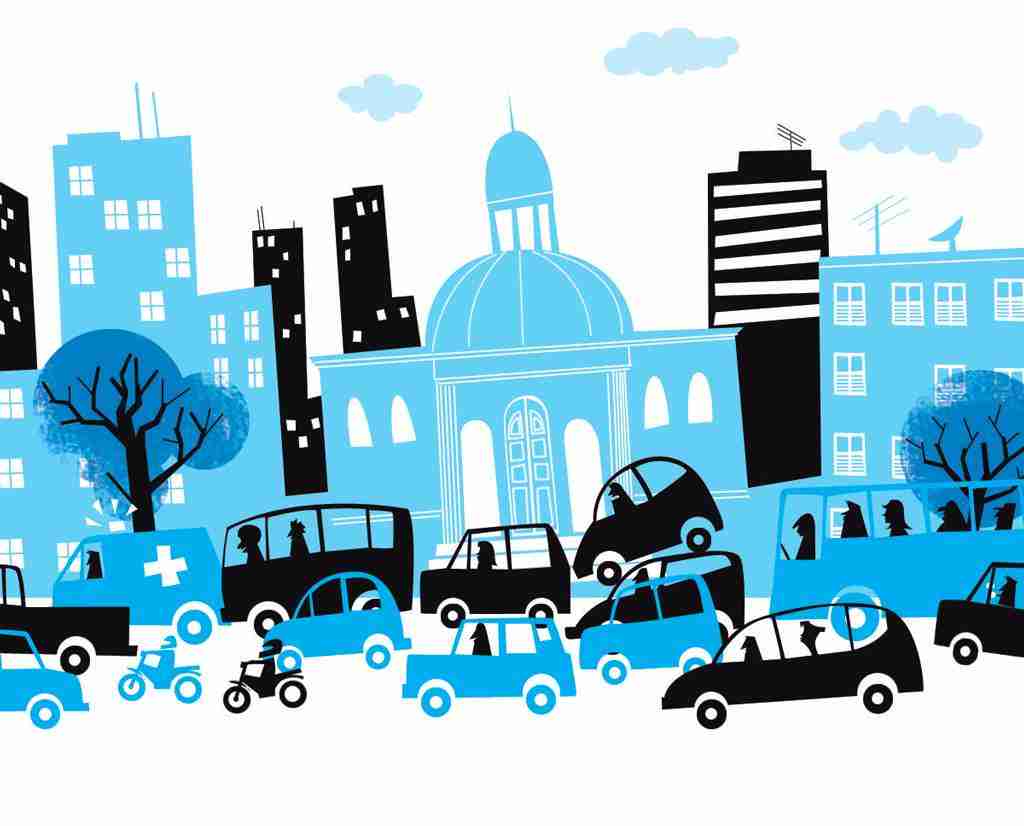
“It makes no sense to divide cities into these two categories [happy or unhappy], but into two others: those that continue to shape desires over the years and through mutations, and those in which desires manage to cancel the city or are canceled by it.” Invisible Cities, Italo Calvino
The city is the habitat par excellence of contemporary Man. UN projections estimate that, by 2050, between 85% and 90% of the planet's population will live in urban areas. Cities are a territory that determines the lifestyle, desires and expectations of each one of us. The Man of our time is essentially a Homo Urbanus. According to UN data from 2014, Brazil has 174.5 million inhabitants in cities (85.7% of the total inhabitants) and the forecast for 2050 is that 91% will live in cities, representing more than 210 million inhabitants, which makes Brazil one of the 50 most urban countries in the world.
This movement brings enormous challenges. One of the most significant is the issue of mobility. With the growth of urban territories and the proliferation of peripheral regions, within an exponential movement and with a historical lack of planning, we have increasingly sprawling cities where the distances between services, workplaces and housing grow in proportion to urban expansion. This affects both the provision of services and infrastructure and the effectiveness and capacity of the city to manage the endless masses of people who travel daily between points in the territory. When we consider that half of this movement takes place between home and work and that, especially in developing countries, this movement takes place in vehicles powered by highly polluting engines – buses, cars, motorcycles – we have an urgent set of challenges.
We spend more and more time in traffic. Traffic jams have very high costs for the planet, for the country, and for each one of us. It is estimated that the costs related to time lost in traffic in 2012 in São Paulo were around R$45 billion, or around 5.7% of the city's GDP. In the same year, Rio was the “slowest” city in the country, with an average commute of 49 minutes, or 7.5% more than the average time spent in São Paulo. These costs represent 5.9% of the GDP, according to a study by Firjan. Another figure indicates that 27% of the Brazilian population uses cars to get around, accounting for 71% of energy consumption in the transportation sector and 59% of local pollutants emitted (ANTP, 2013). This imbalance clearly demonstrates that there is something very wrong with this model.
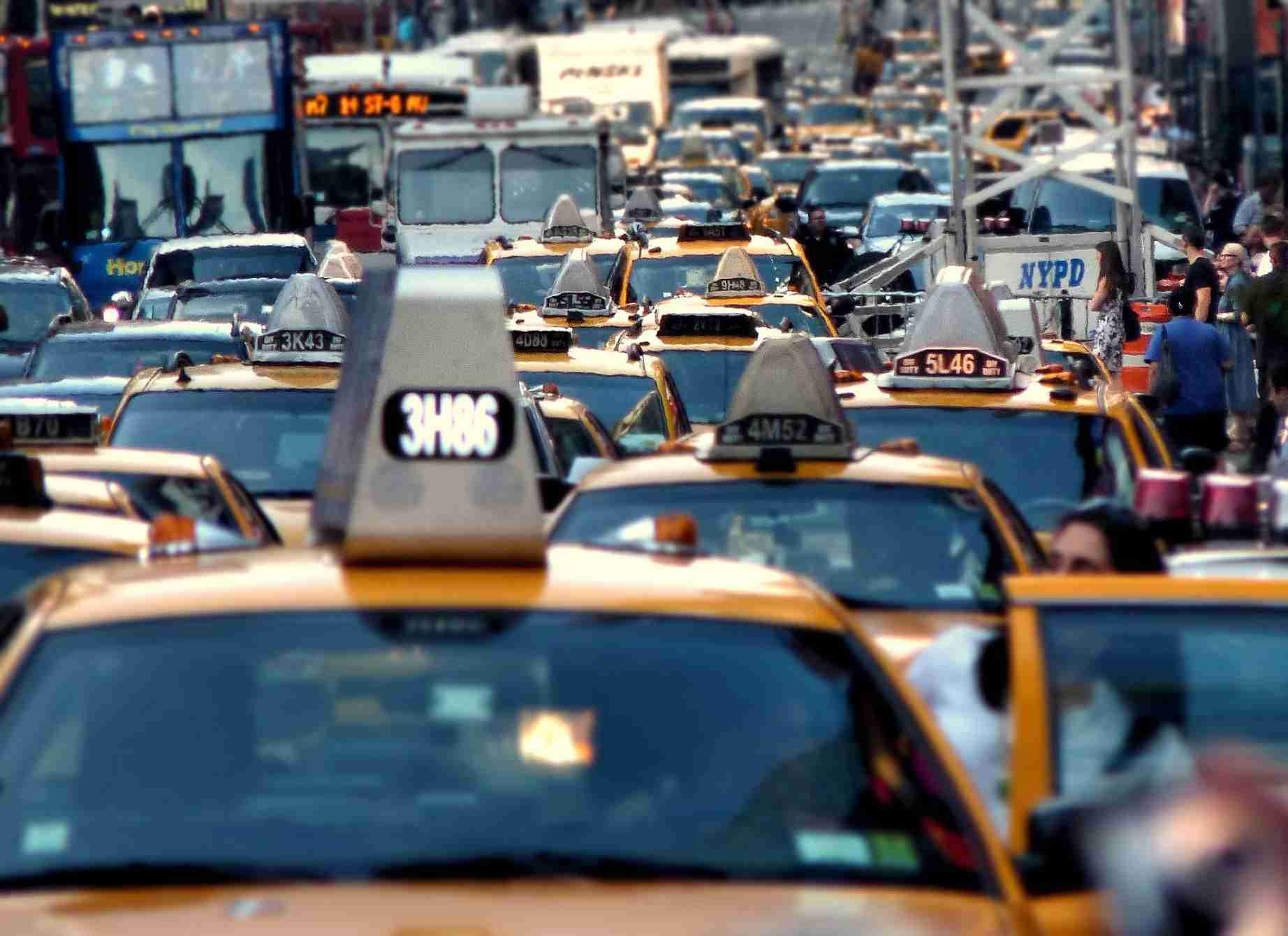 It is estimated that the costs related to time lost in traffic, in 2012, in São Paulo alone, were around R$45 billion.
Traffic costs also impact companies. Decreased productivity, employee transportation costs, and fleet maintenance are increasingly high. With the alarming number of traffic accidents in Brazil, there is also a set of costs that, when considered, require an urgent paradigm shift. Automotive companies have been reinventing themselves within the new framework of mobility demand, and solutions that improve city life are solutions that impact the quality of life of each individual, the productivity of the business sector, and the environment as a whole. Home-work commutes are estimated to account for approximately 50% of urban commutes. Thus, companies are both the cause of travel demand and end up suffering the consequences of traffic jams and the current mobility situation. But they are also the ones that bring us many solutions within this framework.
Crises also provide space for reflection and concrete possibilities for changing the model; and this is an important time to act. Changes are happening and we can modify the current situation through three main movements – reducing our demand for transport and travel, encouraging the change to more sustainable transport modes (greater capacity, lower emissions/per capita and less demand for space on the roads, or non-motorized modes such as bicycles) and improving energy efficiency, reducing pollutants from vehicles circulating on the roads.
The World Business Council for Sustainable Development (WBCSD) has developed the Sustainable Mobility Project (SMP) in six cities around the world, through which companies, using specially developed tools and indicators, suggest sustainable mobility solutions that respect the characteristics of each city. In Brazil, the project was implemented in partnership with CEBDS in the city of Campinas, where, according to a survey conducted by the project, approximately 51.7% of the population claim to use public transportation (in the case of Rio de Janeiro, this number rises to 71% (PDTU, 2013)).
There are no standard mobility models and any diagnosis must be made based on the characteristics of each city. Based on this premise, two publications resulted from the project. One report presents possible financing mechanisms for sustainable mobility, providing tools for the public sector to economically make investments in infrastructure and transport services viable. And a second publication provides indicators to identify the main mobility demands in cities, covering various topics such as comfort, congestion, energy efficiency and accessibility for people with reduced mobility.
The National Urban Mobility Policy, regulated by Law 12,587/2012, requires all municipalities with more than 20,000 inhabitants to submit their mobility plan. The deadline for submitting the plans was extended to 2018, since more than 2,000 municipalities, out of the approximately 3,300 that were supposed to submit their plans, have not yet developed them. The main reason is the lack of technical qualifications and planning tools. In this sense, the Sustainable Mobility Project fulfills an important function by proposing to bring municipal planning closer to the technical knowledge of companies. The private sector can thus contribute to the improvement of our cities, working closely with municipal governments even in the planning phase, showing a possible path to accelerate processes in favor of more sustainable cities, where the right to come and go is guided by low-carbon solutions and high levels of efficiency and integration.


