Ir para o conteúdo
  • Press
  • Contact
  • en_US
  • pt_BR
Menu
  • en_US
  • pt_BR
  • About
    • who we are
    • CEBDS
    • Timeline
    • Vision, mission and principles
    • About WBCSD
    • who is part
    • Team
    • Governance
    • Work with us
    • Our Work
    • Thematic Chambers and Working Groups
    • Advocacy
    • Events
    • Initiatives
    • Training
  • Initiatives
    • Thematic Chambers and Working Groups
    • Climate
    • Energy
    • Biodiversity and Biotechnology
    • Sociobioeconomics
    • Social Impact
    • Agrifood Systems
    • Sustainable Finance
    • Water
    • Advocacy
    • Circular Economy
    • initiatives
    • Coalitions for Decarbonization
    • Net Zero Platform
    • Brazil of Solutions
    • Action Platform for Nature
    • Biodiversity Commitment
    • Water Security Commitment
    • UK Pact
    • Vision 2050
    • IBNBIO
    • Business Movement for the Amazon
  • Content Center
    • press
    • Clipping
    • releases
    • Spokespeople
    • Publications
    • Documents
    • News
    • Articles
  • News
  • Associates
  • Events
  • COP31
Pesquisar
Close this search box.
join

Well-being must be the keynote of the capitalist

  • Posted in 12/03/2013

Representatives of companies, governments and civil society mobilize to change the traditional indicator that measures countries' growth

By Marina Grossi

What cannot be measured cannot be managed. This maxim from the business world is beginning to be extended to areas that are much less Cartesian. The challenge that arises is to build indicators to measure well-being, aiming at increasing people's happiness. Last year, on the eve of Rio+20, Banco Itaú launched its Social Well-Being Index, which brings together a series of economic and social indicators, including inflation, unemployment, life expectancy and inequality. The index still needs to consider important variables to assess the well-being of Brazilians, but the concern points to a new path, unthinkable just a few years ago.

Although isolated, the initiative illustrates a global movement of companies, governments and civil society that are working to replace the Gross Domestic Product (GDP) with an indicator that better represents the increase or decrease in the well-being of a population. The Sustainable Development Goals (SDGs), which will be adopted from 2015, already signal this concern.

The time is right. In an environment of global economic crisis, it is possible to rethink the messianic role that GDP growth has in the planning and future of society. This questioning leads us to the understanding that it is necessary to rethink new parameters that reflect the real sources of happiness of a people. And in companies, the adoption of performance indicators capable of expanding their strategies to a path of promoting effective well-being, both in the society in which they operate and in the relationship with their employees and suppliers.

At the beginning of this century, American psychologist David Myers made this reflection and concluded that, contrary to common sense, economic growth does not lead to an increase in the population's happiness. According to him, despite American society doubling its wealth in 40 years, the number of happy people has declined slightly – the rates of divorce, teenage suicide, depression and violent crime have increased.

In Brazil, economic costs still dominate the scope of social programs, without a holistic approach. Recently, the federal government announced the expansion of the Brazil Without Poverty program, with the goal of lifting more than 2.5 million people out of extreme poverty. In this program, the government uses only the monetary indicator (income of up to R$70.00 per month) to define extremely poor people, without considering fundamental elements such as access to health, housing, education and security.

This new vision is present in many environments, including the corporate environment. Gone are the days when a company sold only products and services. Today, it sells image, concept and benefits linked to the brand. A company with a systemic vision knows that its relationship with the consumer, the environment and society cannot be inconsequential. The idea is to create an auspicious environment.

Large companies are already taking action on a global scale. Natura and Itaipu, for example, have already begun to implement local experiments inspired by the Gross National Happiness of Bhutan, a small Asian country. This corporate vanguardism will certainly contribute to the design of new indicators of global social well-being. The SDGs are expected to demonstrate this concern by seeking indexes to measure new production and consumption patterns starting in 2015. Among the groups that are thinking about the SDGs, it is worth highlighting Paul Polman, CEO of Unilever, and Peter Bakker, president of the World Business Council for Sustainable Development (WBCSD, a global network of which CEBDS is one of the partner institutions).

Still in its infancy, this could be one of the greatest legacies of Rio+20. We must go beyond the restricted measurement of GDP. 21st century capitalism will have to go beyond the pursuit of economic growth alone, pointing its compass towards the well-being and happiness of the population.


Share:

Sign up for our newsletter

Enter your email and receive our content. We respect the privacy of your information by not sharing it with anyone.

Related news

Check out the most current and relevant news to stay on top of what is being debated on the Sustainable Development agenda.

  • Energy Coalition, Coalitions
  • 27/10/2026

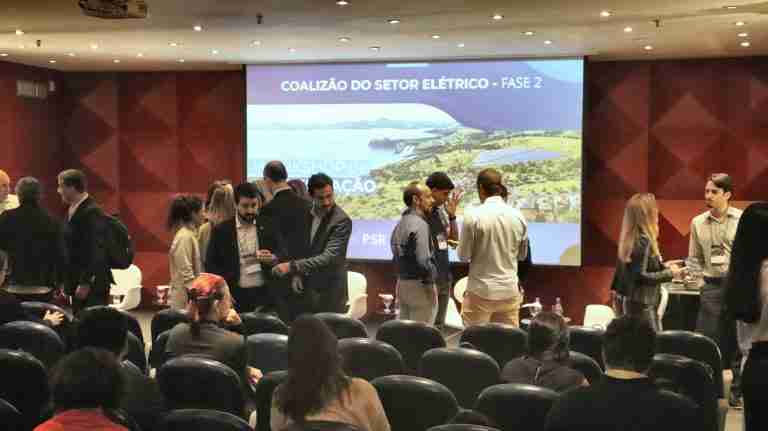
The Electricity Sector Coalition is making progress in discussions on electrification, flexibility, and economic signals.

  • Biodiversity and Biotechnology, COP
  • 20/10/2026

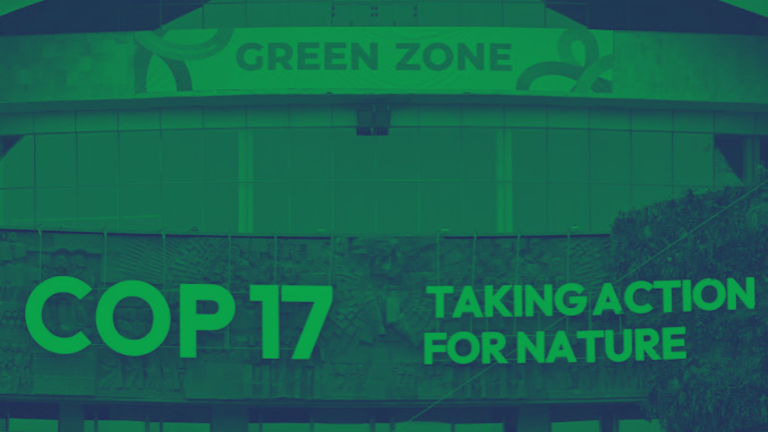
COP17 on Biodiversity 2026 begins in Armenia: follow the main discussions.

  • 13/10/2026

IFRS S1 and S2 advance even with regulatory flexibility.

View more

Related publications

Want to go deeper into this subject? Check here other publications related to this same theme.

  • COP31
  • November 9, 2026

Listen to COP

Pre-COP31 Guide
COP31
  • COP31
Learn more
  • November 5, 2026

Pre-COP31 Guide

The Global Circularity Protocol and the National Circular Economy Strategy
Circular Economy
  • Circular Economy
Learn more
  • November 4, 2026

The Global Circularity Protocol and the National Circular Economy Strategy

IFRS S1 and S2 Guide in Practice
Climate, Energy and Sustainable Finance
  • Climate, Energy and Sustainable Finance
Learn more
  • October 1, 2026

IFRS S1 and S2 Guide in Practice

View more

related events

Check out our upcoming events related to this topic and join us to discuss and share best practices.

Circular Economy

GCP Pilot: 5th Meeting – MEASURE 2 Phase

November 18th
+ learn more
Sustainable Innovation Forum 2026
NYCW

Sustainable Innovation Forum 2026

November 10-11

Climate Action Innovation Zone Antalya, Türkiye

+ learn more
COP31

Accelerating National and Global Decarbonization Through Business Coalition

November 18th

South Africa Pavilion

+ learn more
COP31, Agrifood Systems

Investment in Resilient Supply Chains: Linking Traceability, Emissions, and Finance for Producers

November 16th

Food and Agriculture Pavilion

+ learn more
COP31, Agrifood Systems

From Climate Pathways to Farm-Level Action: Trade, Finance and Agrifood Value Chains

November 16th

Food and Agriculture Pavilion

+ learn more
Coalitions for Implementation in Action: levers to accelerate the climate transition in Brazil
COP31

Coalitions for Implementation in Action: levers to accelerate the climate transition in Brazil

November 19th

Brazil Pavilion - Mutirão Auditorium

+ learn more

View more

THEME CHAMBERS
AND WORK GROUPS

Climate, Energy and Sustainable Finance

Biodiversity and Biotechnology

Amazon

Social Impact

Agrifood Systems

Water

Advocacy

Circular Economy


INITIATIVES

Agrifood Chains

Biodiversity Commitment

Water Security Commitment

COPs

IBNBIO

Business Movement for the Amazon

Action Platform for Nature

Net Zero Platform


ABOUT

CEBDS

Timeline

Vision, mission and principles

WBCSD

how we act

CEBDS advice

Team

Associated companies


CONTENTS

Publications

News

Events

Press


INTEGRITY

code of Conduct

Reporting Channel


CONTACT

+55 21 2483-2250

cebds@cebds.org

CEBDS RJ: São José Street, 40, 3rd Floor. Downtown, Rio de Janeiro, RJ.

CEBDS SP: R. Dr. Virgílio de Carvalho Pinto, 445, 3rd floor Pinheiros, São Paulo, SP.

FOLLOW US

Linkedin Facebook X-twitter youtube Instagram Spotify

BE A MEMBER

Join over 100 business groups working together to accelerate the transition to a sustainable future.

Read more

SUBSCRIBE TO THE NEWSLETTER

Enter your email and receive our content. With this, you authorize the capture, storage and use of data provided in campaigns to disseminate CEBDS publications, events and news by email. Unsubscribing can be requested at any time via descadastro@cebds.org.

Privacy Notice

Terms of use

Cookie Policy

CEBDS. All rights reserved. Copyright 2023© – Produced by Ludus and developed by webinhood.