
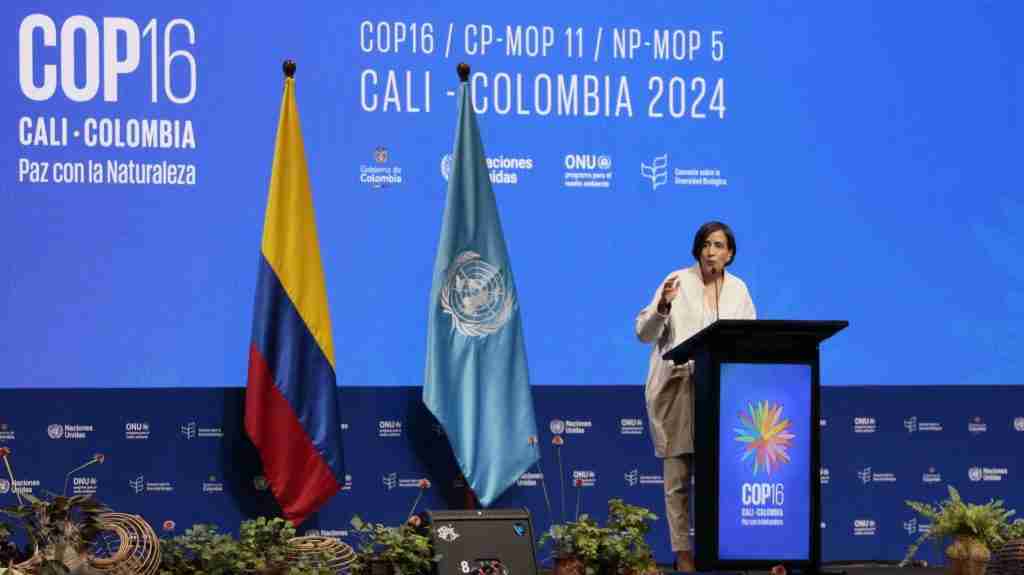
Expectations for COP16 are that important advances will be made in meeting the goals of the Legal Framework for Biodiversity and that there will be greater participation from the private sector.
The city of Cali, Colombia, will host the 16th United Nations Conference on Biodiversity, between October 21 and November 1, 2024. The event is expected to attract more than 23,000 participants, including 73 employees from 42 companies associated with CEBDS, making up the conference's business body.
Guiding the meeting, the theme “peace with nature” is a call to action to think about the relationship between human beings and the environment, aiming to establish a balance between the parties and provide a harmonious link with the ecosystem of planet Earth, as an economic model is planned without exploitation and contamination of the environment.
Objectives of CEBDS and its associates
Focused on preserving biological diversity, COP16 is expected to be the largest Biodiversity Conference in history, not only in size, with 190 countries present, but also in terms of the private sector's participation in discussions on biological preservation. Representing the business sector, the participation of CEBDS and its associates seeks to mobilize businesses on effective actions in favor of preserving biodiversity, focusing on the implementation of sustainability in their agendas.
The delegation's objectives include implementing the National Strategy and Action Plan for Biodiversity (EPANB), focusing on Target 15 of the Legal Framework for Biodiversity, in addition to boosting the national agenda for business and investments in the bioeconomy. For Bruna Pasquini, Project Manager at Arcadis, associated with CEBDS, COP16 is also a moment of alignment between the private sector and governments:
There is also the expectation of monitoring the actions of national governments, especially the Brazilian government, to align business strategies with public policies and understand how these measures can affect investments and operations. The private sector also hopes to use COP 16 as a platform to strengthen sustainability commitments, exploring opportunities for partnerships and new models that contribute to the conservation and regeneration of ecosystems.
– Bruna Pasquini, Project Manager at Arcadis
Joint work between the public and private sectors can be an asset for biological preservation, especially in countries considered megadiverse, such as Colombia, the host country of the event, and Brazil, which are home to a wide variety of fauna and flora. Regarding the engagement of the Brazilian business sector in the event, Giovanna Cappellano, ESG Coordinator at Grupo Sabará, associated with CEBDS, highlights the importance of the delegation:
The promotion of COPs in general as a source of dissemination of knowledge and promotion of good practices, and not just of negotiation between countries, together with the visible need for the involvement of the private sector for the urgent implementation of actions with the aim of mitigating the scenarios we have been facing, is reflected, in our opinion, in the greater involvement of CEBDS associates in this COP.
– Giovanna Cappellano, ESG Coordinator at Sabará Group
Among the demands of the event, one of the highlights is the demand that countries that have signed up to the Global Biodiversity Framework present their National Biodiversity Strategies and Action Plans (NBSAPs) by this edition, something that was done by less than 20% of the signatories.
Global Biodiversity Framework and the Bioeconomy
In December 2022, during COP15, the Kunming-Montreal Global Biodiversity Framework was established, with 23 targets to be met by 2030, with the aim of halting and reversing the process of environmental degradation. CEBDS's work is directly linked to Target 15 of the agreement, which defines the role of the business sector in the pursuit of biodiversity conservation, driving the adoption of sustainable production models and reducing negative impacts on nature.
Another important topic for discussions on biodiversity is the transformation of the current economic model into one that uses biological resources in its production stages. At COP16, the bioeconomy emerged as a way to align global conservation goals with sustainable economic growth, creating opportunities for the private sector, local communities and governments to collaborate in building a greener and more resilient future.
The economic model is based on the sustainable use of biological resources, such as plants, animals, microorganisms and biomass, to produce food, energy, industrial products and other goods and leverage the potential of biodiversity and ecosystems.
CEBDS Agenda at COP16
You can follow updates from the CEBDS delegation at COP16 by accessing the #CEBDSnaCOP16 hub by clicking here. We invite everyone to learn about and get involved in our program – details are available at the following link: https://bit.ly/Agenda-CEBDS-COP16

