Climate tragedies disproportionately affect the poorest populations. That is why future business and government managers urgently need training in climate justice
By Marina Grossi*
What is the relationship between a racial equity program for training executives and board members and the extreme climate events that have once again become major tragedies for the Brazilian population? Although the two issues appear to have little connection, two new concepts are uniting them and gaining ground at international conferences, the COPs: climate justice and environmental racism.
While climate justice reflects the struggle of poor and vulnerable countries and regions against the consequences of global warming – historically caused by countries with the highest concentration of income – environmental racism concerns the vulnerability of the black population to environmental issues. The term, coined by African-American civil rights activist Benjamin Franklin Chavis in 1981, sheds light on ethnic-racial discrimination in the development of public policies, in addition to the deliberate targeting of poor communities, generally made up of black and brown people, to environmentally unhealthy areas.
Both topics were part of a class I gave in early February on climate change as part of the Racial Equality Program on Boards of the Brazilian Institute of Corporate Governance (IBGC). The program, carried out in partnership with the Business Initiative for Racial Equality and B3, aims to increase the presence of black people on boards of directors and addresses a variety of current topics. The meeting brought together around 30 students – black and brown professionals who already serve on boards or are senior executives of companies and organizations in sectors such as finance, telecommunications, consulting, retail and technology. I addressed the context of climate change for business, how to address it (mitigation, adaptation, financing, losses and damages) and Brazil's position on the global stage.
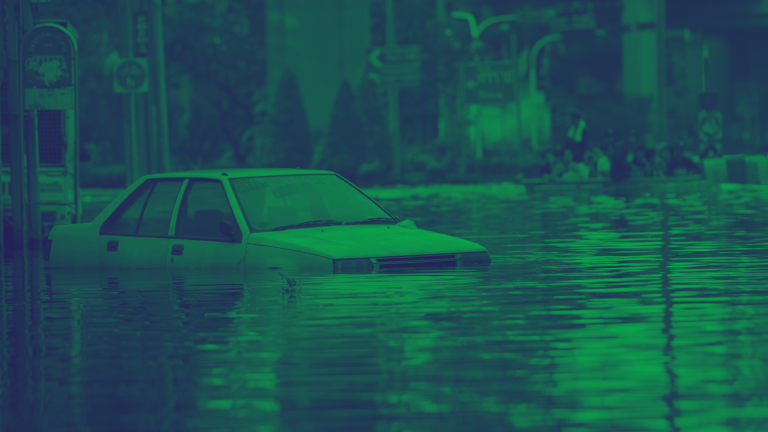
The meeting was held a fortnight before another unprecedented tragedy involving the climate making headlines. The northern coast of São Paulo, especially the municipality of São Sebastião, was hit by torrential rains, with an accumulation of 682 mm in 24 hours, a volume never seen before in Brazilian historical records. The index surpassed that of the city of Petrópolis, in the mountainous region of Rio, which recorded an accumulation of 530 mm in 24 hours in 2022 – that is, in the period of one year, there were two extreme rainfall events. The result was devastating, with more than 60 deaths, more than 4,000 people homeless or displaced, and countless material losses.
Climate tragedies disproportionately affect the poorest and most vulnerable populations – which is why it is so important that the issues of climate justice and environmental racism are part of the training of future leaders, whether in companies or government. It is no coincidence that these concepts were addressed in the training course for counselors.
The environmental, social and governance agenda, which gained repercussion in the acronym ESG, requires a change in companies' position. The climate crisis, in particular, is already impacting business and will demand innovation from leaders and strategic decision-making levels. And the connection between innovation and diversity and inclusion is unequivocal, as evoked by different studies. One of them, by the consulting firm Accenture, conducted with 18 thousand professionals in 27 countries, concluded that more diverse companies are 11 times more innovative than their competitors. Another survey, by the magazine “Harvard Business Review”, analyzed 163 companies over 13 years and concluded that, among those with more women in leadership positions, there is greater openness to change, less propensity to risk and greater focus on innovation.
* Marina Grossi is president of CEBDS (Brazilian Business Council for Sustainable Development), an entity with more than 100 associated companies whose combined revenue is equivalent to almost 50% of Brazilian GDP