If we follow the right path until 2030, we will reach the Brazil we want by 2050: more prosperous, resilient and inclusive.
By Marina Grossi*
As at the beginning of every year, on the eve of the leaders' meeting held in Davos, Switzerland, the World Economic Forum releases the Global Risks Report, a study that brings together the perceptions of more than 1,200 experts from the areas of business, academia, governments, civil society and the international community on the main risk factors for the global economy. For some time now, issues related to environmental, social and governance (ESG) have frequently appeared at the top of global concerns. This year was no different, although there is a significant difference when looking at the short-term (up to two years) and long-term (ten years) risks highlighted by the report.
The five main risks for the next two years listed by the study are: the cost of living crisis; natural disasters and extreme weather events; geoeconomic confrontations; failure to mitigate climate change; erosion of social cohesion with polarization of society. As the report highlights, the return to a “new normal” after the COVID-19 pandemic was quickly interrupted by the outbreak of war in Ukraine, triggering a new series of food and energy supply crises – triggering inflationary pressures and widening the gap between rich and poor.
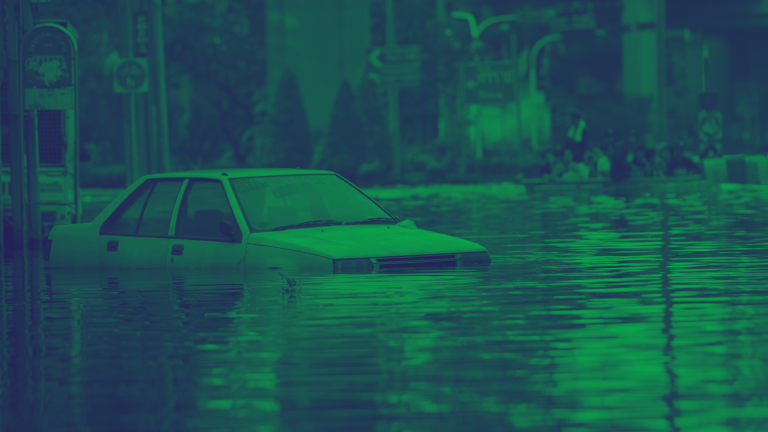
When looking at the risks for the next ten years, the four biggest factors of concern highlighted by experts are environmental in nature: failure to mitigate climate change; failure to adapt to climate change; natural disasters and extreme weather events; loss of biodiversity and collapse of ecosystems; in fifth place are large-scale involuntary migrations, which can be caused by several factors, including environmental issues. Of the ten biggest risks identified for the next decade, six are linked to socio-environmental issues.
Thus, the current difficulties impact the short-term risk outlook: the report highlights the return of familiar risks, such as inflation, high living costs, trade wars, capital outflows from emerging markets, widespread social unrest, geopolitical confrontation and even the specter of nuclear war. According to the International Monetary Fund (IMF), at least one-third of the global economy is expected to face a recession by 2023. This scenario full of uncertainties opens a new era of low growth, low global investment and deglobalization, a decline in human development indices, which adds to the growing pressure of climate change in an increasingly narrow window to prevent the planet's temperature from rising above 1.5°C, the goal of the Paris Agreement.
The scenario outlined in the World Economic Forum report is challenging for both business leaders and policymakers. Social issues, the “S” in ESG, have become pressing in this scenario of economic uncertainty and in the face of worsening social inequalities since the beginning of the pandemic, as shown in another study released at the Davos Forum by the Oxfam network of civil society organizations. For the first time in 30 years, the organization points out, extreme wealth and extreme poverty have grown simultaneously.
“Worldwide, 81 billionaires hold more wealth than the world’s 50% – with the richest 1% holding 45.6% of global wealth, while the poorest half hold a paltry 0.75%. Combined, the pandemic and war have halted progress in reducing extreme poverty and exacerbated inequalities, particularly in access to health, education, food and energy.
Combating poverty and inequality in a world already punished by the impacts of climate change thus becomes a twofold task. At the Brazilian Business Council for Sustainable Development (CEBDS), we see that the way forward is to combine the reduction of the social gap with economic activities linked to the transition to low carbon, in a development project that is very suitable for Brazil. In the publication “Vision 2050”, which we launched in 2021, we propose paths for the future based on eight priority themes: people, cities, circular economy, water and sanitation, biodiversity, food, energy and finance. The document, a true guide for business and society, was formulated based on the contributions of 4,000 experts.
The “Vision 2050” envisions that it is possible for Brazil to reach the middle of the century with energy security and negative carbon emissions, with universal access to drinking water and sanitation, with a development model that respects sociobiodiversity, with technology and education focused on the economy of care, among other points. The path involves overcoming the false dichotomy between preservation and economic development and promoting investments and businesses of an inclusive and regenerative nature. Caring for our biomes, firmly combating illegal deforestation, our greatest blemish, will give the country the means to promote a bioeconomy of standing forests, generating new businesses and prosperity.
The issue is urgent, given that changes in land use account for 49% of our greenhouse gas emissions. Recent data from Imazon indicate that deforestation in the Amazon between 2019 and 2022 reached 35.1 thousand km², the worst rate in the last 15 years and an increase of almost 150% compared to the previous four-year period (2015-2018). CEBDS sees as positive the signal that combating forest loss will receive strategic attention from the new government, with cross-cutting actions involving several ministries.
The business sector shares this view and can contribute to the government in addressing the issue. Our Council of Leaders, made up of 95 CEOs of large member companies, will receive the Minister of the Environment and Climate Change, Marina Silva, in February to discuss ways to seek a development model that will halt the loss of ecosystems and, more than that, seek regeneration, in line with the low-carbon economy.
The future is built today: that is why we need to do our best in the coming years, known as the decade of implementation of the Sustainable Development Goals (SDGs) of the United Nations 2030 Agenda. In this way, we will follow the right path until 2030 and, by 2050, we will reach the Brazil we want – more prosperous, resilient and inclusive.
* Marina Grossi is president of CEBDS (Brazilian Business Council for Sustainable Development), an entity with more than 100 associated companies whose combined revenue is equivalent to almost 50% of Brazilian GDP